How Online Custom Parts Platforms Handle Hard-to-Quote Geometries
Algorithms price fast, but DFM review catches what they miss.

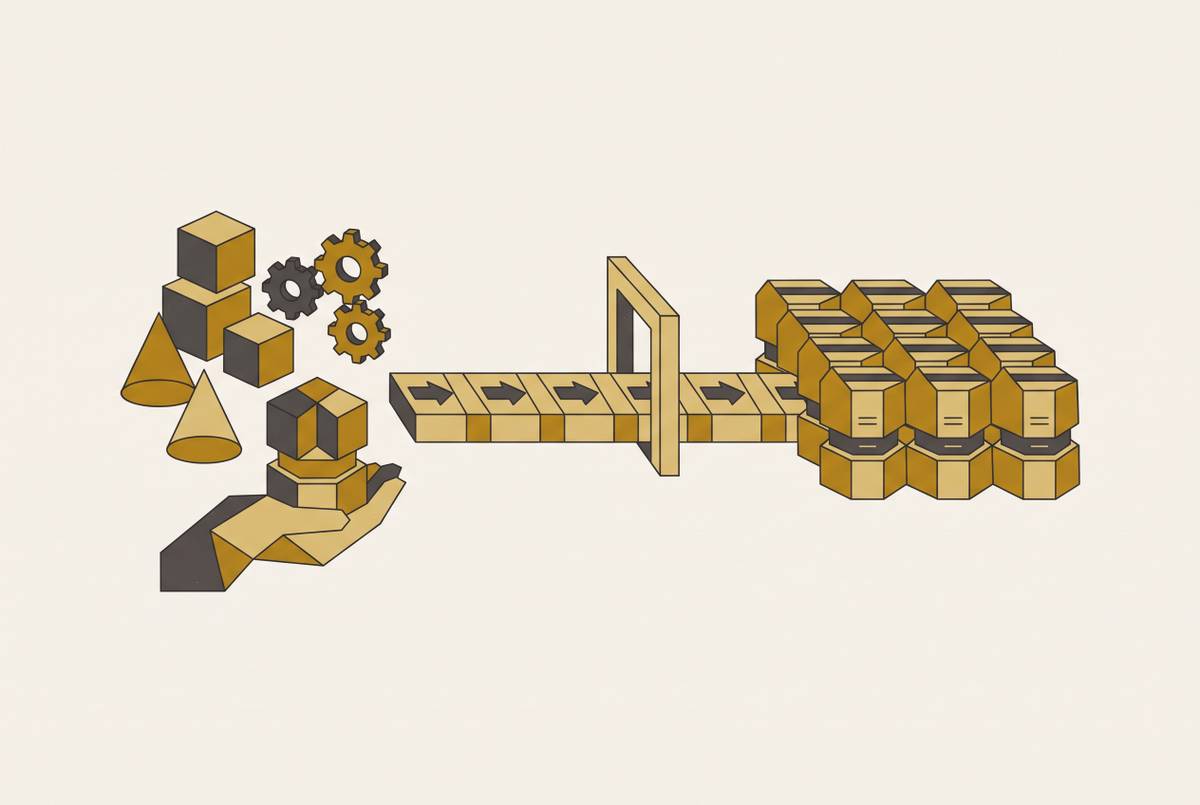
Instant-quote platforms do one thing extremely well: they read a file and return a number fast, sometimes in minutes. An engineer uploads a STEP or DXF file, the system parses it for recognizable features (bends, holes, cutouts, material volume) and prices what it finds. For a clean, manufacturable design, this saves real time compared to waiting on a manual estimate.
Automated geometry extraction drives that speed. The algorithm identifies shapes it has been trained to recognize, calculates cost based on those shapes, and routes the order into a network of shops built to respond quickly. Speed carries commercial weight here: by the time a traditional shop finishes a manual estimate, a digital-first competitor has often already won the order. Platforms are built around that advantage, and it shows in how aggressively they optimize for turnaround on straightforward parts.
The trouble starts at the edge of what the algorithm can actually evaluate. Tight tolerances, complex internal radii, wall thickness edge cases, and finishing processes that shift final dimensions: geometry extraction alone can't judge any of this for manufacturability. When a part crosses that line, a platform has three options: return a price that will likely change later, decline to quote the part outright, or route it to a human for manual review. The algorithm prices what it sees on the surface of the file. It does not know whether the part will actually manufacture the same way twice, and that gap is where the next layer of scrutiny has to come in.
What DFM review checks that an algorithm cannot
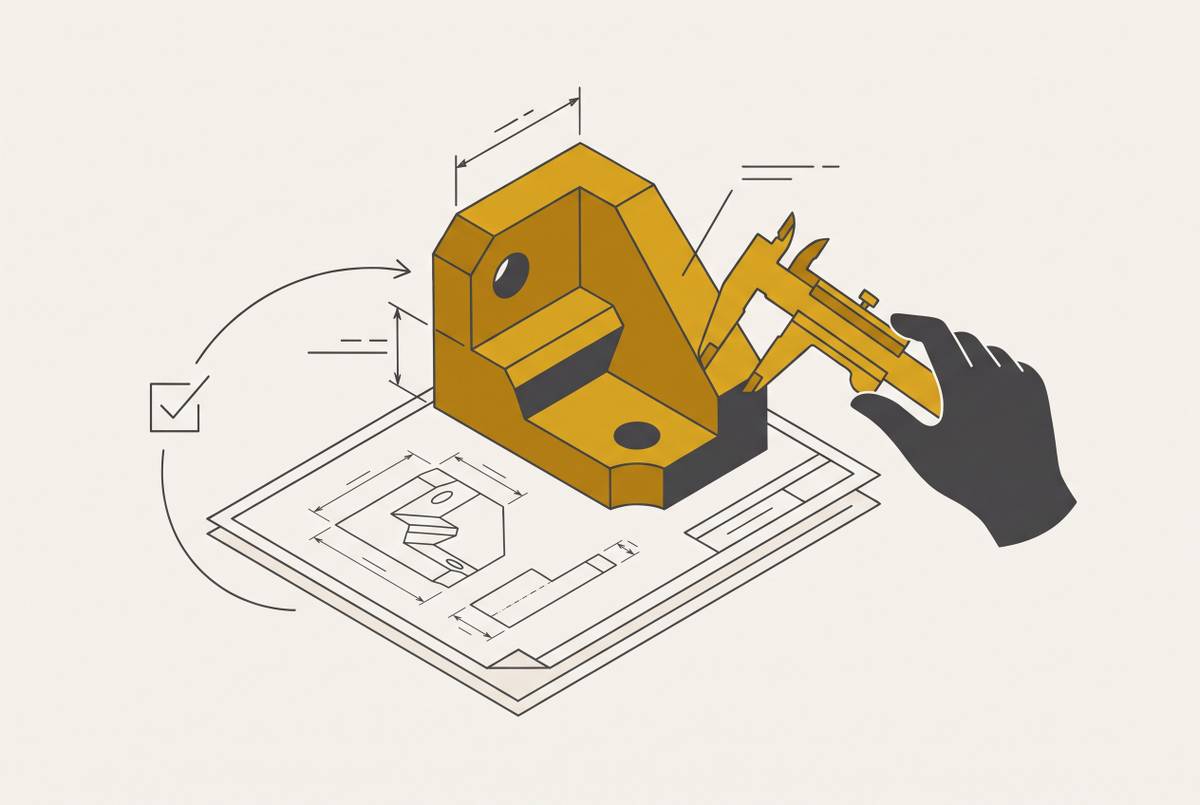
Design for manufacturability review decides whether a quoted geometry will produce consistent, inspectable parts before anyone cuts metal. It functions earlier and more fundamentally than quality assurance, because it catches the problems that quality assurance would otherwise find after the fact.
For sheet metal specifically, DFM review checks bend radius against material thickness, hole-to-edge and hole-to-bend distances, flange lengths that a press brake can physically reach, access for welding, and how a finishing process will shift hole and slot dimensions once coating or plating is applied. Early, transparent feedback on a design changes what a quote even is: instead of a number, it becomes engineering insight an engineer can act on before committing to tooling. DFM analysis run directly on 3D models can surface these manufacturability issues in real time, turning what would have been a downstream cost into something visible upfront.
Modern DFM software can do this even when a full feature history isn't attached to the file. It can recognize geometry features directly from raw CAD data and evaluate them against preset criteria: wall thickness, undercuts, sharp edges, draft angles, boss and rib constraints, hole placement, and the proximity of holes to bends. The tooling behind this feature recognition keeps advancing. CADEXSOFT released version 2025.8 of its Manufacturing Toolkit in December 2025, and it added enhanced CNC hole and pocket recognition along with wall thickness visualization shown as a heat color map, so you can inspect thickness distribution directly on the model before you even get a quote.
None of this changes what algorithmic pricing alone will do with a flawed part. An instant-quote system can return a price for a part carrying every one of these issues, because geometry extraction does not evaluate manufacturability the way DFM review does. DFM review is what catches bend-hole proximity violations, undercuts, and thickness problems before they turn into scrap, a re-quote, or an engineering change fee. When that review happens after an order is placed instead of before, the final invoice from an instant-quote platform can run higher than the original algorithmic number, driven by re-review fees, change fees, and parts that were marked manufacturable but later required scrap or redesign.
The three platform architectures and the DFM trade-off each one makes
How a platform is built determines what happens the moment an algorithm hits a part it cannot price correctly. Three architectures dominate the custom manufacturing space right now, and each one trades speed, engineering access, and accountability differently.
An instant-quote marketplace platform routes your part algorithmically to a network of third-party shops. Speed stays consistent when a part falls within the algorithm's comfort zone, but if it needs engineering discussion, a self-service interface built for fast transactions can't handle it well. Production volumes that require negotiating tolerances or setup don't fit this model well: repeat orders can land with different shops across the network, introducing part-to-part variation on what should be an identical component. Quality varies by supplier, you rarely know which shop actually produced a given part, and the middleman's markup stays undisclosed.
Vetted-network platforms with direct supplier communication, Jiga among them, take a different approach. Engineers talk directly to the supplier making their part, which is the right structure for precision work that needs real DFM collaboration. The trade-off is turnaround: these platforms don't promise the guaranteed speed of an owned-facility model. Their value is transparency and direct engineering dialogue, not a fixed delivery window.
Integrated fabrication partners, direct-facility operations like Fabcon and full-BOM sourcing partners, build human engineering review into the quoting stage itself. DFM collaboration happens before production starts, and fabrication, finishing, and assembly all run under one roof. So you get single-source traceability, stable lead times across repeat orders from the same setup, and direct access to the CAM engineer who is actually programming the part. If your program carries compliance requirements like ITAR, AS9100, or ISO 13485, the integrated model cuts out a layer of verification overhead that marketplace platforms otherwise add.
Across all three architectures, the number that actually matters is time to correct part: the span from CAD submission to an inspectable, usable component, not how fast the initial quote came back. If a low headline price needs three rounds of re-quoting, it isn't a low-cost option by the time the part actually ships. And none of these three architectures, on their own, solve a problem that sits one level above individual part pricing: what happens when the job isn't one part, but a full bill of materials spanning five different processes.
Algorithmic quoting's hardest cases: tube bending, custom springs, and carbon fiber
Three process categories mark the outer edge of what instant-quote systems can currently handle: tube bending, custom springs, and carbon fiber. Each one breaks down for a different structural reason.
Tube bending is the most recently automated of the three, and also the one with the most ground left to cover. That's a real advance in the category, and as online quoting gets more convenient for tube bending, more engineers will design around the process rather than away from it, which should drive new demand across fabrication generally. The reason tube bending resisted automation for so long comes down to tooling specificity: the simulation has to model the exact die and mandrel combination, not a generic bend radius. A platform that skips that step isn't quoting the actual part, it's quoting an approximation of one.
Custom springs sit further behind. None of the major suppliers in this space have confirmed instant-quote capability for custom spring geometries, and the category structurally requires specification-driven engineering review. MW Components, whose brands include Century Spring and Fox Valley Spring, offers close to unlimited custom spring manufacturing alongside roughly 40,000 stock spring designs ready for same-day shipping, but custom geometries still move through a quote-request process. Wermke Spring, certified to ISO 9001:2015, works with wire from.004 inches to 1.250 inches in diameter across materials including stainless steel, chrome silicon, brass, beryllium copper, titanium, Inconel, Monel, phosphor bronze, and music wire, with no confirmed instant-quote path for custom designs. Four different suppliers, four different catalogs, and the same structural answer across all of them: custom spring geometry needs a person looking at the spec before a price means anything.
Carbon fiber and composites represent the hardest category to automate, because the quote is inseparable from process and tooling decisions that have to be made before a price is meaningful. At JCSPORTLINE, a technical feasibility report covering material route, structural risk, mold strategy, and demolding feasibility comes back within 24 hours of receiving usable data. A tooling price quoted before anyone has opened the file is a sales estimate. It is not an engineering number.
File Preparation and CAD Export Choices
Engineers blame platform limitations for re-quote friction, but much of it actually starts upstream, when you prepare the file. Better export practice closes a meaningful chunk of that gap before a file ever reaches a quoting system.
STEP is the right format for manufacturing quotes. It preserves solid geometry and works across every major CAD platform and quoting system, but if your geometry is complex 3D, DXF alone can't carry enough information. Best practice is exporting both formats when they're relevant: 3MF for 3D printing, and STEP paired with a 2D drawing for manufacturing quotes and engineering review. The 2D drawing matters because it carries tolerance callouts and manufacturing notes that a STEP file can't represent on its own.
On the CAD/CAM side, tools like Autodesk Fusion bring CAD, CAM, CAE, and PCB design together in one cloud environment, so modeling, simulation, toolpath generation, and data management all happen in a single workspace. For teams that need design and manufacturing to stay in sync, that setup removes a layer of translation pipeline overhead that used to eat time between design intent and shop floor execution.
On the quoting infrastructure side, you need ERP-driven logic with real-time integration, because a quote has to reflect current material surcharges and actual shop capacity the moment it's generated. Platforms missing that integration produce quotes that go stale and change after an order is already placed.
The practical upshot for engineers is straightforward: a clean STEP file, an accompanying 2D drawing, tolerance callouts, and finish specifications give any platform, algorithmic or human-reviewed, the best possible foundation for an accurate first-pass price. Files missing that information all but guarantee a follow-up round of questions, delays, and revised numbers.
The real quoting problem for most hardware teams: the BOM level, not the individual part level
Even a platform that prices every individual part correctly still leaves hardware teams with a structural problem. An assembly that needs CNC machining, sheet metal, tube bending, custom springs, and carbon fiber has to be stitched together across multiple vendors, multiple purchase orders, and multiple delivery timelines, and no single-part quote solves that coordination problem.
Engineering teams sourcing complex assemblies routinely get stuck in long RFQ cycles because different processes require different vendors. Marketplace platforms aren't built to solve this because their architecture focuses on routing individual parts quickly, not on coordinating an assembly that spans five separate manufacturing processes.
One emerging model treats mechanical sourcing the way contract manufacturing has long treated electronics. For sheet metal and machining work, that means tolerance and finish DFM callouts built into the process, suppliers tiered by process capability, and PPAP or FAI planning handled upfront. Yijin Solution is one example of a partner operating this way.
The cost of fragmentation extends past coordination time. When repeat orders for the same component get routed to different shops across a marketplace network, part-to-part variation goes up, and that drives up incoming inspection costs and forces adjustments on the assembly line. What's left is figuring out how to tell, platform by platform, whether that structural answer is actually on offer.
Platform due diligence for complex geometry
The right due-diligence questions for a complex part come straight out of the failure modes described above, not from a platform's marketing page. Start with how the platform handles geometry it can't actually evaluate: a system that silently returns a price for an unmanufacturable part is more dangerous than one that declines the job and routes it to a human, so find out which path complex features trigger before committing a design to it.
Check whether DFM feedback happens during the quote or only after the purchase order is signed. DFM review that happens after the PO is already in motion functions only as a re-quote notification, not a manufacturability review. The strongest platforms build DFM feedback into the quoting step itself, so you can change the design before anything gets cut.
Look closely at what certifications actually cover. On marketplace platforms, credentials like ISO 9001, AS9100, ISO 13485, IATF 16949, and ITAR registration can apply to the platform entity rather than to the specific shop that will physically produce the part, so confirm which one holds the certification before assuming it covers the work.
Consider whether the platform handles the full scope of the assembly or only the easy parts of it. If a platform prices the CNC block cleanly but can't touch the tube bending, the spring, or the carbon fiber bracket, it hasn't solved your sourcing problem. It has pushed the hardest parts of that problem back onto the engineer to solve separately.
Ask whether an engineer is reachable the same day for questions the algorithm can't answer. When a quote hinges on a judgment call that automated geometry extraction simply isn't equipped to make, same-day access to a person who can make that call is the baseline, not a premium feature.
Find out what happens when a part fails inspection. A remake-or-refund guarantee is the standard a serious manufacturing partner should meet without being asked, and a platform that lacks one is quietly shifting all the quality risk onto the buyer.
Finally, ask whether the platform can consolidate an entire BOM into one purchase order and one shipment. If it can't, the time spent coordinating parallel vendor relationships across multiple processes will eat up whatever time the instant quote was supposed to save.