Reconciling Quoted Price Against Final Invoice on Custom Parts Orders
Four predictable gaps between quote and invoice explain most custom-parts billing disputes.

Whenever a quote turns into an invoice, two documents built at two different moments finally meet, and the gap between them almost never comes from a billing mistake. The quote is a forecast: scope, labor, machine time, material cost, best guess before anything gets cut. The invoice is a record of what actually happened on the shop floor. Most of the daylight between the two comes down to timing, and it's predictable enough that an engineer who knows where to look can close most of it before the PO ever goes out.
The average invoice takes 17.4 days to process through accounts payable, compared to 3.1 days at the best-run AP teams. That two-week stretch is where discrepancies quietly pile up. Scope shifts, material costs move, and by the time someone pulls the original quote back out, nobody remembers which change order authorized what. The instinct is to blame the vendor for billing wrong. That's rarely what happened. More often, the PO, the goods receipt, and the invoice live in three separate systems, and nobody lines them up until month-end forces the issue.
The four mismatch types that account for most custom-parts invoice exceptions
Invoice exceptions on custom parts aren't random. They fall into four repeatable patterns, and each one has its own signature and its own fix.
Quantity mismatches come from partial shipments. Custom parts often go out in waves, a first batch, then the rest once additional operations or scheduling catch up. If the invoice bills the full ordered quantity but the dock only logged what actually arrived that week, that's not fraud. It's sequencing. Require a goods receipt entry in the system before anyone approves payment, so the mismatch is visible the day the truck pulls in, not four weeks later at reconciliation.
Unit-of-measure gaps look like pricing disputes but aren't. A quote priced per hundred pieces, an invoice billed per piece, a PO written in a UOM that doesn't match the vendor's own system: none of that is a dispute over money. It's a conversion error, and it's entirely avoidable if someone confirms UOM alignment on every PO line before it goes out the door.
Contract or quote price changes are a frequent reason a correctly billed, legitimate invoice gets flagged as an exception. Material surcharges, rush fees, tariff pass-throughs get applied after the original quote goes out, but nobody updates the PO to match. The invoice reflects the new number. The PO still carries the old one. Nothing here is wrong, exactly. It's just unsynced.
Missing PO references stall payment regardless of whether the price and quantity are both dead-on. An invoice that can't be matched to a PO number sits in limbo. It's an administrative gap, not a pricing error, but it holds up the check just as effectively.
Hidden cost layers built into custom-parts quotes that surface only on the invoice
A quoted price on a custom part covers what's visible: machine time, material, basic labor. A second layer underneath that most quotes never mention exists mostly because the shop can't fully price it until the job is actually running.
Take CNC machining. Machine time running $40 to $150 an hour, material, basic labor, CAM programming, standard QC, the visible stuff, usually covers 60% to 75% of the final bill. The rest appears in line items that rarely make the first quote: fixture design fees (quoted around 15% but landing closer to $120 an hour once the work actually happens), material waste markup around 30%, ISO inspection surcharges near 8%, tool wear charges of roughly $0.50 a part, rush shipping tacking on another 25%. Setup costs alone can eat 30% to 90% of total part cost on low-volume runs, since that expense gets amortized across quantity and a five-piece prototype order carries the full weight of it alone. Sending the same CAD file to three shops routinely produces a price spread of two to three times. That gap almost never comes from the base machine rate. It comes down to which of these items each shop bakes into the quote up front, and which ones they hold back for the invoice.
Sheet metal fabrication runs its own version of the same game. Standard lead time is 5 to 7 days, and rushing that adds a 20% to 40% surcharge most buyers never see coming. Quality inspection charges rarely appear on a prototype quote at all: First Article Inspection at $100 to $500, CMM dimensional inspection at $50 to $200, mill certs tacking on $20 to $80 more. Small batch orders also produce inefficient nest layouts on the laser, which drives up scrap. That waste doesn't appear as its own line; it inflates the material number, which makes it easy to miss on a quick read. It just inflates the material number, which makes it easy to miss on a quick read.
Then there's the macro layer sitting on top of all of it. A 25% US tariff on steel imports from all countries took effect March 12, 2025, and it reset the cost basis for structural and machined components overnight. Any quote issued before that date on steel-heavy work was dead on arrival the moment the tariff hit. Static pricing doesn't hold the way it used to in a market like this, and anyone reviewing a quote on imported material or tooling now needs at least a working knowledge of HTS codes. That's not optional anymore.
What to lock down in the quote before a PO is issued
The whole point of tightening up the quote is giving the invoice something concrete to match against later. Catching a discrepancy at receipt takes a few minutes. Catching the same discrepancy at month-end turns into a multi-day chase involving three people who weren't even in the room when the deal got made.
Start with the expiration date. A custom-parts quote needs an explicit validity window, because material surcharges and tariff moves can invalidate pricing fast. If a quote doesn't state one, get written confirmation that the price holds through the expected PO date. Silence doesn't mean the number is locked, it means nobody's checked.
Push for full line-item disclosure before signing anything. Are setup and fixture fees included? Inspection, FAI, CMM, certs? Material waste markup? Finish or plating? Packaging and freight? Find out whether the items missing from the summary are baked into the unit price or waiting to show up later as a surprise line. A quote that folds everything into one clean number without explaining what's inside it is a dispute waiting to happen.
Confirm the unit of measure on every line, in writing, on the PO itself, spelling it out rather than leaving it as a bare quantity. If the quote's UOM language doesn't match the ERP or the receiving system, fix that mismatch before the PO goes out, not after the invoice arrives and someone has to reverse-engineer the conversion.
How design decisions made before the quote is issued become invoice surprises later
Roughly 70% of manufacturing cost gets locked in during design, before anyone even requests a quote. Most of what eventually lands on the invoice was decided months earlier, at the CAD stage, by someone who never saw a price sheet.
Tolerances are the clearest example. Tighten a tolerance past what the part actually needs, and machining time climbs, inspection requirements climb, scrap rates climb, and each of those can either show up as its own line item or get folded quietly into a higher unit price nobody bothers to explain. Hold tight tolerances only where they're functionally necessary, sealing surfaces, press fits, alignment features, and leave everything else as open as the design allows. An over-toleranced feature on a non-critical dimension is an unauthorized cost addition, full stop, and it's going to turn up somewhere on the bill.
Geometry works the same way. A complex shape that needs specialized tooling, multiple setups, or wire EDM generates fixture and setup costs that often never made it onto the first quote, because the shop hadn't yet discovered on the floor that the part couldn't run the way it was originally estimated. That discovery happens during production, and the cost appears on the invoice afterward. A well-optimized design can cost $50 while an over-engineered one doing the exact same job can cost $500, and that decision gets locked in long before anyone starts talking price.
Material selection carries its own risk. Aluminum 6061 is globally stocked and widely available through most suppliers. Switching to a specialty alloy midway through a project brings weeks of sourcing lead time and a surcharge the original quote never accounted for. Material choice also drives tool wear, and plenty of shops pass that along as a per-part surcharge, often around $0.50 a piece, that appears once the invoice is cut.
Why multi-vendor BOMs amplify quote-to-invoice gaps
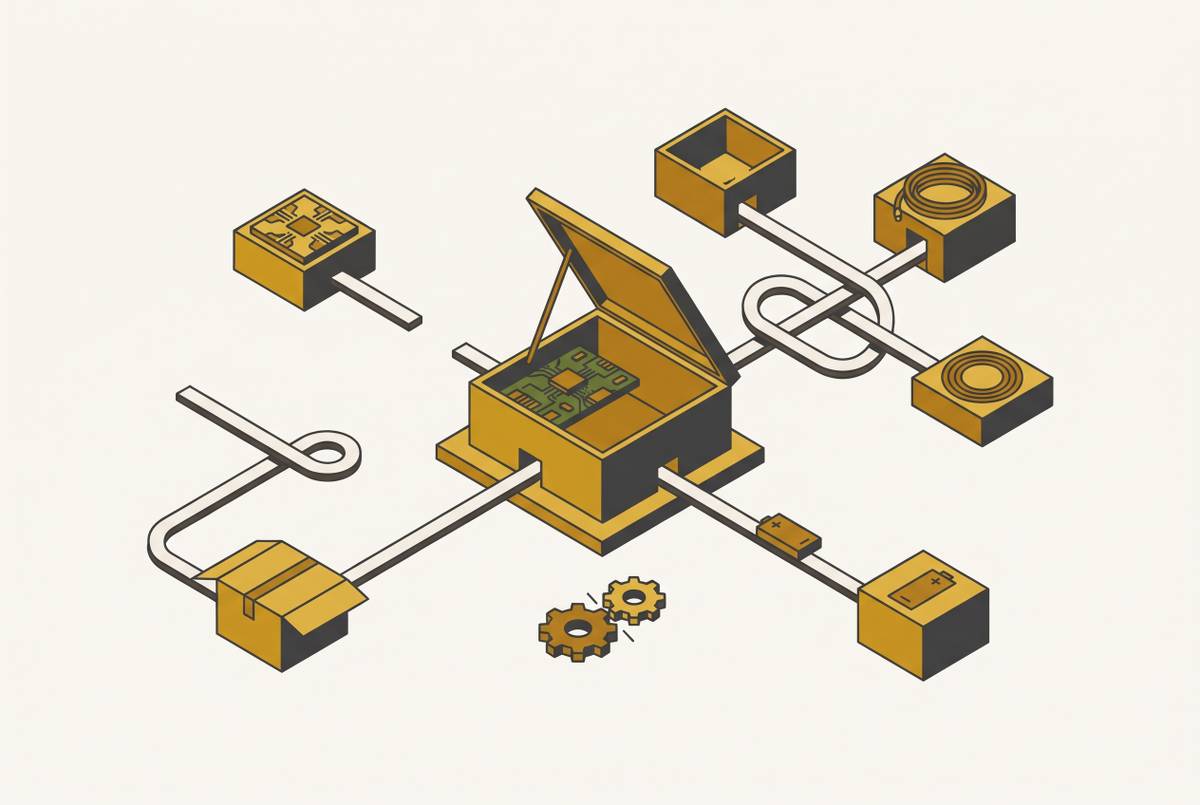
On a mechanical BOM spread across multiple processes, every vendor brings its own quote, its own PO, its own invoice, its own reconciliation headache. The error rate doesn't add up line by line across those vendors. It compounds vendor by vendor, because each relationship carries its own version of every mismatch already covered above.
Comparing unit prices between a small job shop and a fully integrated partner rarely tells the whole story either. Coordination time, expediting costs, incoming inspection, freight, rework: all of that gets absorbed by the buyer's own team instead of appearing as a line item anywhere on any invoice. It stays invisible until a project slips or a part fails inspection, and only then does the real cost of running five vendors instead of one become obvious. That two-week stretch is where discrepancies quietly pile up. A shop that subcontracts finishing or secondary ops quietly adds another invoice tier that never appeared in the original number.
Consolidating onto a single vendor collapses the whole problem at once. One quote, one PO, one invoice, one shipment: three-way matching turns from a spreadsheet exercise into a five-minute check, and any exception routes to one relationship instead of five separate email threads. A vertically integrated partner whose pricing already reflects the full scope, engineering, fabrication, finishing, assembly, makes the quote-to-invoice comparison mean something real. It becomes an apples-to-apples check instead of a guessing game over who owns which surcharge.
Evaluating a potential consolidation partner comes down to a handful of concrete questions. Does the team run design-for-manufacturability review at the quote stage? Are they upfront about what's in-house versus subcontracted? What quality certifications do they hold, is ITAR registration relevant, and is there a quality guarantee that keeps a rework dispute from turning into an invoice renegotiation six weeks later?
A practical reconciliation workflow once the invoice arrives
Discrepancies still happen even with tight discipline upstream. The goal isn't zero exceptions, it's routing and resolving them fast instead of letting them turn into a fire drill.
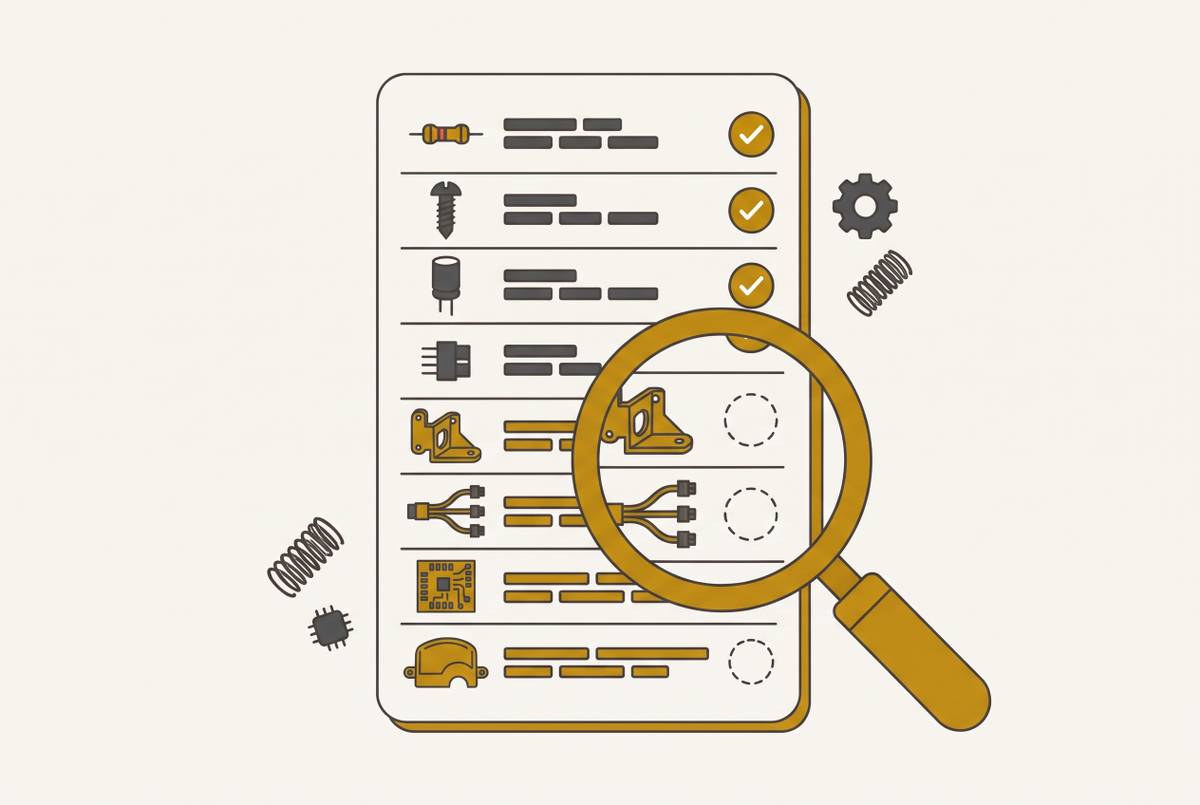
Pull all three documents into one place before doing anything else: the original accepted quote, the issued PO with any change orders, and the goods receipt or packing list. If any one of those three is missing, that's the finding right there, and the fix is closing the documentation gap, not calling the vendor to relitigate a price that was never actually confirmed on paper.
From there, sort the discrepancy by type before escalating anything. For a quantity mismatch, walk the numbers straight through in order: PO quantity, then goods receipt quantity, then invoice quantity. If a partial shipment explains the gap, confirm whether a second invoice is still coming for the remainder, so the same discrepancy doesn't get flagged twice by two different people. For a price mismatch, compare invoice unit price against quoted unit price line by line, and if a surcharge appears that wasn't on the original quote, check for written disclosure of it before the PO was issued. Sort the mismatch by type first, and the resolution path is already half-decided before anyone picks up the phone.