Qualifying a Supplier for Complex Weldments and Fabricated Assemblies
How to evaluate a supplier's process controls across cutting, forming, welding, and finishing.
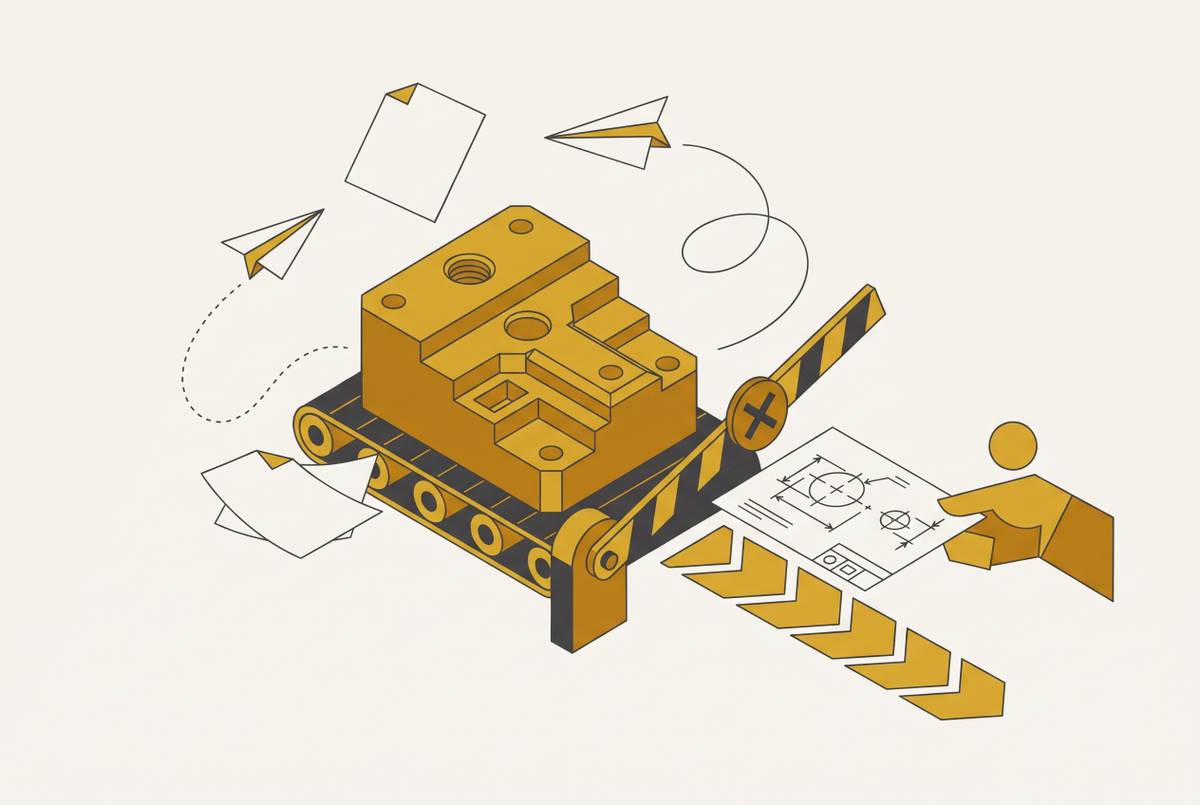
An engineer receives a batch of welded brackets back from a supplier. Then the bracket won't seat against its mating part, because the formed leg is off by a degree and a half from a press brake that drifted three jobs ago. A fabricated assembly typically moves through design and engineering support, laser cutting or CNC punching, press brake forming, machining, MIG or TIG welding, hardware insertion, grinding and finishing, mechanical assembly, and final inspection, and each one of those stages hands the next stage a set of conditions it has to work within. The sections that follow walk the chain in order, building one layer at a time, because that's the only sequence that actually catches where risk gets introduced.
Cutting and forming quality as the ceiling for weld quality
Fit-up is the single biggest controllable variable at the welding station, and it gets decided before a welder ever picks up a torch. Clean, accurate laser cutting and consistent press-brake bending give you parts that sit together the way the drawing intended. Good forming can also remove a weld. A bracket that once needed three cut pieces joined with two welds might get redesigned as a single formed part with one weld. That means one less joint that can fail and one less fixture to build.
Ask what controls govern the process at this stage, since that's where a buyer's questions should focus. Ask what the supplier does to check formed part dimensions before those parts reach the weld fixture.
If a supplier can verify cut and formed dimensions in-house before parts reach the weld fixture, that shows real process integration. If a supplier quotes welding work without ever asking for inspection data on the formed components feeding into it, they treat the upstream steps as someone else's problem.
Fixture design and weld sequence as a qualification criterion, not a shop floor detail
Fixturing sits between forming and welding, and it's one of the least visible parts of the process to a buyer, yet it has an outsized effect on whether an assembly holds its dimensions run after run. Welding heats metal locally, and that metal expands as it heats and contracts as it cools. The variables that drive this distortion are specific and a good supplier should be able to name them without hesitation: material type and thickness, weld size and length, joint configuration, heat input, weld sequence, fixture design, and the overall geometry of the assembly.
A supplier doing this well has dedicated fixtures built for each assembly's geometry, not a drawer of generic clamps pulled out depending on the job. Robotic welding fits well where fit-up, joint access, and volume support automation, and it delivers strong repeatability once those conditions are met. Manual welding stays the better choice for large, complex, or hard-to-reach assemblies where automation can't get a torch where it needs to go. A supplier worth qualifying can explain which approach fits which job and why, instead of running everything through one method because that's the only line they've built.
Asking a supplier whether weld sequences, fixture designs, and heat input parameters are documented and standardized, rather than left to discretion, is a direct way to find out whether fixturing is treated as engineering or as something figured out on the floor. That distinction tends to separate the suppliers who can repeat a complex weldment geometry reliably from those who can't. The simplest test of all: ask the supplier to walk through the fixture and weld sequence used on a recently finished assembly similar in size and complexity to the one being quoted. One who can't is improvising.
Process selection across the welding methods a complex weldment may require
When a supplier offers only one welding process, they are asking engineers to design every part around that one method's limits.
Electron beam welding and laser welding sit further out on the spectrum, and tend to appear on aerospace and defense programs more than general fabrication work. Laser welding works well on smaller or thinner components, running with low heat input and fast cycle times without needing a vacuum chamber, and it shows up in sensors, bellows, heat exchangers, and battery assemblies.
Across every one of these methods, the goal is the same: use the lowest heat input that still produces a sound joint. Process selection is about controlling distortion and keeping the dimensional integrity of everything around that joint intact, not just getting a strong joint. Any buyer with that kind of combination in a BOM should ask the supplier directly whether they hold qualified procedures for it, not just general welding capability.
What welding certifications and procedure qualification records confirm, and what they don't
Certifications prove a supplier has documented, controlled processes on paper. They don't prove those processes get followed the same way on lot 40 as they were on lot one. For weld-intensive programs, the certification landscape typically includes ISO 9001:2015 for general quality management, AS9100D for aerospace, NADCAP for special processes including welding, and ISO 13485:2016, covering the full lifecycle of medical devices. Gaps in these certifications carry real cost: missing the right one can stall customer approvals, delay source inspections, trip up first article requirements, or hold up supplier onboarding.
Procedure qualification records and welding procedure specifications document something more specific than a certification does. The two codes aren't interchangeable: AWS D1.1 covers fabrication, erection, inspection, and welder and procedure qualification together, so a supplier qualified under one code isn't automatically qualified under the other.
Certifications and procedure records won't catch quality fade, the slow drift where a supplier starts cutting corners after the first approved batch ships, whether that's switching to thinner material, bringing in an unauthorized subcontractor, or skipping an inspection step nobody's watching for. So the real defense against that is requiring batch-level inspection data for the life of the program, not a single first-article report filed away and forgotten. It's also important to check who signs off on weld inspection, because a facility can hold ISO 9001 certification and still have no AWS Certified Welding Inspector on staff. Ask for that person's name and credentials directly.
DFM review as a qualification event, not a vendor courtesy
A supplier who offers no design-for-manufacturing feedback before quoting is telling a buyer, before any money changes hands, that their quality system doesn't connect engineering to the shop floor. DFM for weldments is specific advice tied to a given part and process, and it changes outcomes. Tolerances should reflect everything that happens to the part, how cutting, bending, and welding each affect what's achievable, not a blanket number copied from a different kind of job.
Weld volume is another place DFM earns its keep. A supplier doing DFM well flags excessive weld volume at the quote stage, not in a corrective action report after the parts have already shipped back wrong. Joint design features, things like interlocking tabs, slots, bosses, and carefully placed holes, support repeatable fit-up and can take the place of elaborate external fixturing, and a supplier running real DFM review will suggest these changes when they apply.
At a capable supplier, this happens at the RFQ stage: engineering and estimating teams look over drawings, 3D CAD files, and welding requirements before a quote goes out, catching manufacturability problems while there's still time to fix them cheaply. The test a buyer can run on day one: ask the supplier to walk through one DFM issue they caught at quote stage on a recent, similar weldment. A supplier doing this work regularly will have an answer ready without digging.
Finishing and post-weld processing as an accountability boundary, not an afterthought
Every time a part leaves one shop and goes to another for finishing, that handoff becomes a gap in the quality chain unless someone is actively managing it. A finished weldment might need weld grinding or cosmetic cleanup where it's specified, stress relief or heat treatment, surface cleaning or sandblasting ahead of a coating, and then powder coating, plating, passivation, or anodizing, often handled through an outside service.
Coordinating those outside finishing steps well keeps accountability for the part's finished condition with the supplier doing the coordinating. A supplier who ships parts out with no documented handoff, no inspection when the parts come back, and no finish spec written into their own work instructions has a broken link in the chain, and the buyer ends up with a finished part that has no traceable owner for the coating on it.
On programs where traceability matters, aerospace, defense, anything medical-adjacent, the same documentation chain covering certifications, lot tracking, and process records needs to extend through finishing. Any drift introduced during finishing goes uncaught until it appears at final inspection or later, in a much more expensive form.
Inspection methods and documentation practices that confirm quality across the full chain
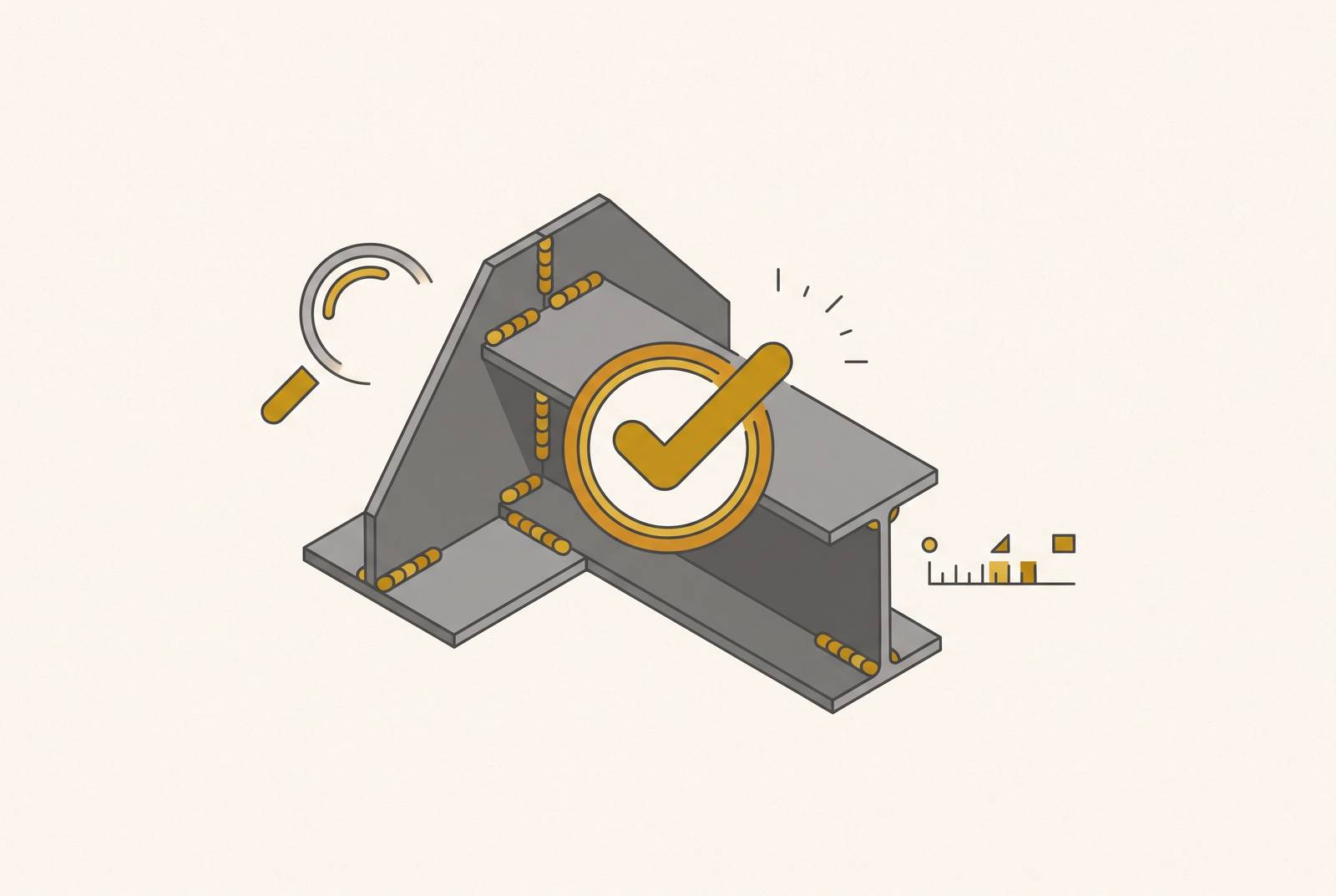
Dimensional inspection at the end of the line is where every upstream decision in the chain gets confirmed or exposed, but only if the inspection plan actually covers the finished assembly rather than just the individual components checked before welding. A complete inspection workflow at a capable supplier verifies dimensional accuracy with CMMs or calibrated hand tools, examines welds visually and documents them with inspection reports and certifications where required, and for aerospace, defense, and medical programs, maintains full traceability with material certifications carried through the entire process chain.
A first-article report only proves a supplier can build the part correctly once. Batch-level inspection data sustained across the life of the program is the real defense against quality fade, the same slow drift in standards that certifications alone can't catch. Digital QA logs with full traceability are replacing paper records in a lot of shops, so ask a supplier directly whether they can hand over digital inspection documentation.
Nondestructive testing requirements depend heavily on which code governs the job. AWS D1.1 calls for radiographic or ultrasonic testing on the test coupon before mechanical testing when a WPS is being qualified by test, though prequalified WPSs skip that qualification testing. A supplier should be able to name exactly which NDT methods they run in-house and which ones they send out, and to whom. The warning signs here are consistent: no inspection reports offered until a buyer specifically asks for them, only a first-article report available on a program that's supposed to run repeat production, no one clearly responsible for signing off on inspection, and records that exist only on paper with no digital trail behind them.
Vendor fragmentation and multiplied risk
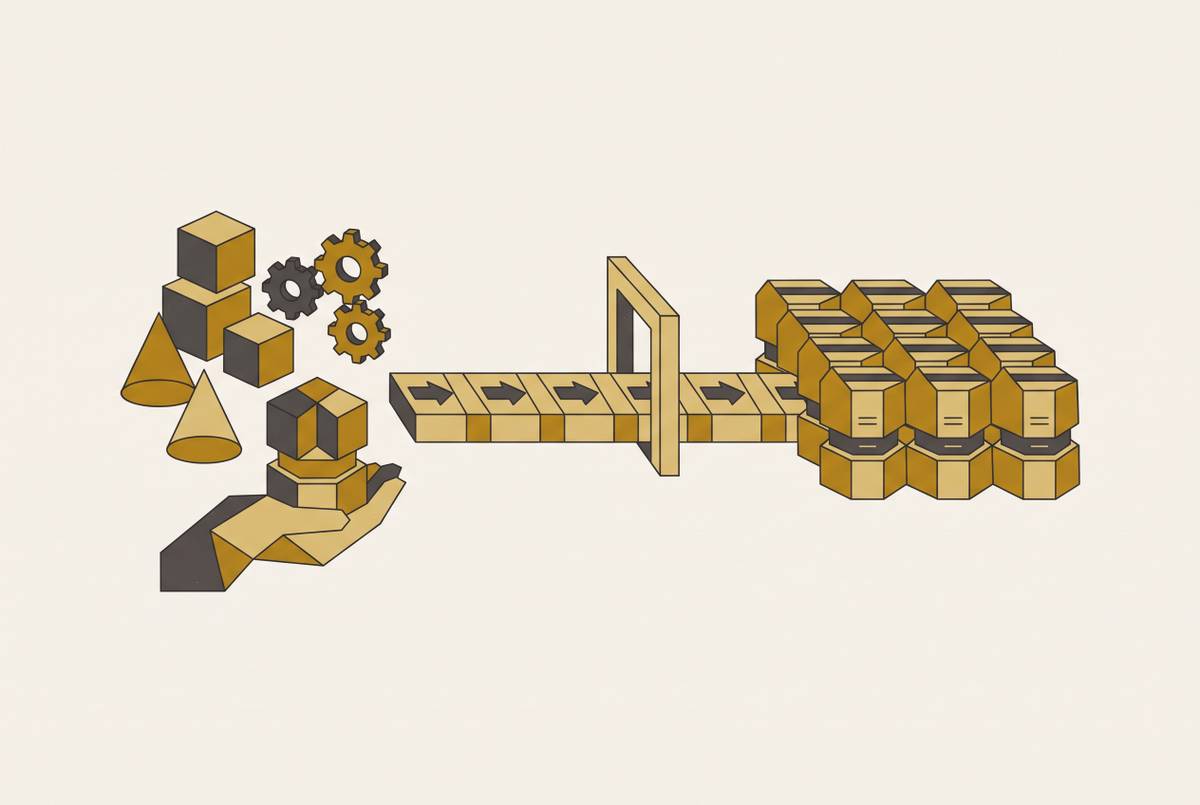
Splitting cutting, forming, welding, finishing, and inspection across separate vendors doesn't spread the risk of each stage thinner. It stacks new quality boundaries, traceability gaps, and coordination work at every single handoff. A bare-metal part ships from a fabricator to a finishing house, then to an assembly shop, then back somewhere for inspection, and each one of those transfers adds lead time, a new point where accountability can get lost, and a seam where a defect from one stage gets pinned on the next one instead.
Consolidating these steps under one supplier removes that seam at its source. A true single-source operation for complex weldments covers laser and plasma cutting, press-brake forming and plate rolling, MIG and robotic welding, CNC machining of critical features, finishing handled in-house or closely coordinated, and CMM-based in-process inspection, all running under one quality system, one purchase order, and one shipment.
This interdependency across cutting, forming, fixturing, and welding is why suppliers who manage the full mechanical BOM as connected processes, instead of farming pieces out to separate vendors, tend to produce more reliable weldments. When sheet metal fabrication, welding, and finishing all sit under one roof with one quality system watching over them, there's no handoff where traceability or responsibility can quietly go missing. If a partner can quote and deliver that entire BOM in one shipment, they remove that coordination burden, which is the case OneWeekParts makes for custom mechanical sourcing generally.
A practical qualification checklist organized by process stage
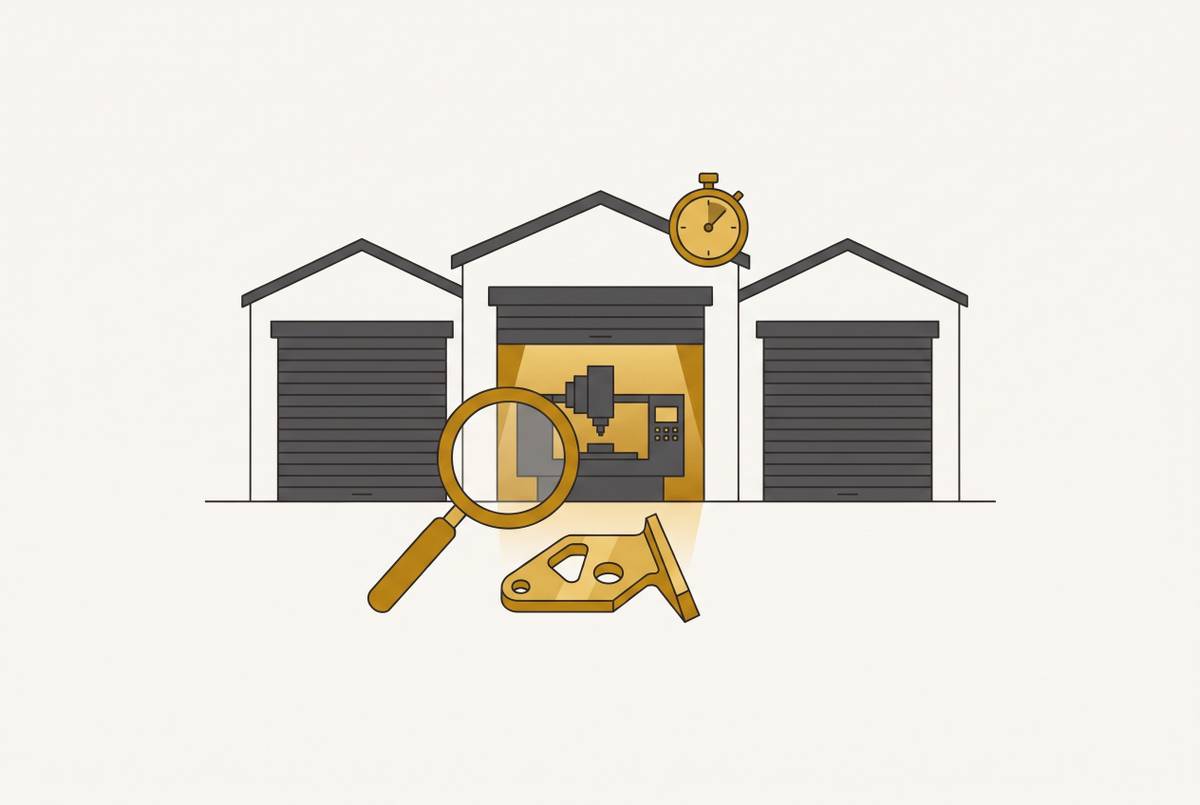
A qualification checklist only works if it follows the actual order parts move through the shop, because starting with weld questions before asking about cutting and forming produces a backwards audit that skips right past the upstream failures this whole framework exists to catch. On cutting and forming, the right questions cover what cutting technology is available in-house, whether that's laser, plasma, or waterjet, which materials and thicknesses each one handles, how formed component dimensions get verified before parts reach the weld fixture, and whether the supplier can deliver parts that are bolt-ready or weld-prep-ready without extra secondary operations tacked on.
Finishing and post-weld processing need their own check: which finishing steps happen in-house versus get sent out, whether the supplier re-inspects critical dimensions after finishing or heat treatment, and whether the quality system and traceability documentation extend through finishing. Inspection and documentation bring their own set of questions: which inspection methods get used, CMM, calibrated hand tools, visual, or NDT, and for which specific features, whether batch-level inspection data exists for ongoing production rather than just a single first-article report, whether digital inspection records and QA logs are available or only paper mill certs, and which NDT methods are run in-house versus subcontracted, and to which approved vendors. Finally, on consolidation and vendor accountability, confirm whether a single purchase order and a single quality record cover the complete assembly, whether any subcontracted process sits with a vendor on the supplier's own approved vendor list and under their quality system, and whether the supplier can quote the full assembly BOM, including specialty processes like custom springs, gaskets, or tube bends.