How to Write an RFQ That Forces a Supplier to Engage With a Complex Geometry Instead of Declining It
Complete RFQ packages let estimators price tricky parts instead of passing.
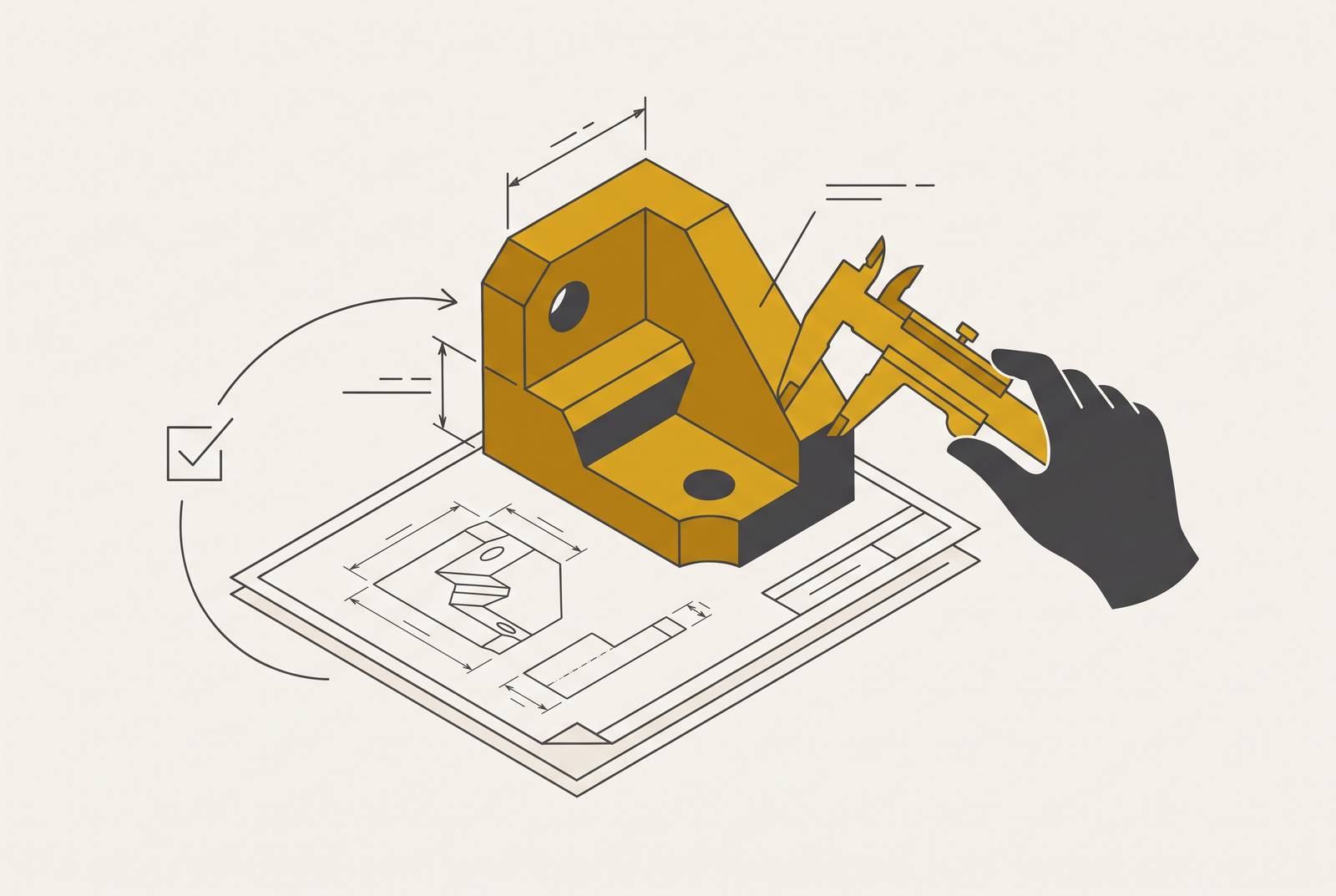
For custom parts sourcing for complex geometries and exotic processes, the RFQ package is usually the first place to fix a failed quote request. Give estimators the information they need to price the route, tooling, inspection, and production plan without guessing. Then direct that package to a partner whose capabilities cover the assembly.
Why suppliers decline complex geometry at the triage stage, before engineering ever sees it
Suppliers start with triage before they move on to detailed engineering. Estimating teams sort incoming RFQs by how confidently they can price them. A complex part demands process routing, fixture planning, an inspection method, and cycle-time modeling before a supplier can commit to a number. When the package leaves those decisions unresolved, the estimator must either absorb the uncertainty or put the inquiry aside. Too often, the inquiry goes no further.
That rejection can look like a limit on machining capability. It may instead be an information gap. A shop can have 5-axis machines, CMM inspection, and hard-alloy experience yet lack enough information to quote your part reliably. The practical response is to remove avoidable assumptions before asking another supplier to evaluate the same geometry.
What an estimating team actually needs to commit to a quote on a complex part
The estimator’s job is prediction. First comes the part’s function, then its geometry and material, then the process route those requirements allow. That route must work with the inspection method the part needs. How many parts are needed determines which tooling approach makes sense, while delivery and commercial terms set the limits of what the supplier agrees to do. A missing answer interrupts the sequence.
Incomplete inputs do not always produce a rejection. Sometimes they produce a price padded with conservative assumptions, making a viable part look unaffordable before any useful negotiation begins. Comparable quotes therefore need engineering drawings, 3D models, material specifications, quantity tiers, surface finish, and secondary operations. They also need quality requirements, packaging, delivery, and tooling expectations.
Establishing functional context before the first drawing attachment
Start the package with two to four sentences explaining what the part does, what it interfaces with, what load or environment it sees, and which failure mode must be prevented. Function changes how the supplier reads the drawing. A static-load bracket, a fluid sealing face, and a cosmetic enclosure may all be machined aluminum, but they do not have the same governing requirements. The paragraph should explain why the specifications are needed without becoming a design disclosure.
Consider the same part and drawing sent two ways. Without context, a demanding surface finish call leaves the supplier to infer why it exists. A paragraph identifying that surface as a dynamic sealing face gives the requirement a clear purpose.
Include assembly context where it is available. Mating parts and critical stack-ups show the supplier how the parts must fit together. State whether the assembly is a prototype proving a concept or a production unit that must interchange with field hardware. That distinction gives the estimator a firmer basis for reading the requirements that follow.
Building the geometry package: what the STEP file cannot communicate and the 2D drawing must
A STEP file defines the shape. Supply the 3D model and the 2D drawing together. For complex geometry, the drawing establishes tolerances, GD&T controls, datum references, and inspection rules that the supplier needs to select a process route.
Each control narrows that choice in a different way. Flatness requirements can call for surface grinding or precision fixturing, while runout and concentricity are best achieved by turning or grinding in a single setup. Positional tolerances on hole patterns typically lead to CMM verification or functional gauging. These requirements affect both how the part is made and how its acceptance is proved.
Datum references also establish the coordinate system for fixturing. A supplier planning a 5-axis setup needs that information before committing to the work. Without explicit controls, the estimator may be unable to distinguish a job suited to standard 3-axis milling from one needing 5-axis setups, wire EDM, or jig grinding. The missing information becomes either a risk allowance or a reason to decline.
Tolerance tiering: how blanket tight tolerances cause complex parts to be overquoted or dropped
Tight tolerances everywhere add machining time, tool wear, and inspection work to dimensions that may not govern function. They also make it harder to spot the features that need tight tolerances. A supplier may price all that extra work or decide the quote would be too high to be worth preparing.
Instead, structure the drawing in three tiers. Critical features such as fits, bores, sealing faces, and datum surfaces need explicit tight tolerances with GD&T controls. Significant dimensions that affect assembly fit or clearance need moderate tolerances that are spelled out. General dimensions that do not govern function can reference a block tolerance standard, such as ISO 2768, or a title-block note.
This distinction gives the estimator a usable precision map. It identifies where demanding machining and inspection are justified and where standard work is sufficient. It also signals that the engineer understands the part’s function rather than treating every dimension as equally critical. The goal is a more accurate quote without changing what the part must do.
Material specification that closes the routing decision rather than opening a guessing game
An incomplete material call leaves as much room for guesswork as missing GD&T. Name the grade, condition or minimum density where relevant, required finish or treatment, service environment, and certification requirements. The supplier needs enough information both to identify stock and to plan machining and secondary operations.
A useful material line is “316L, passivated, part sees alcohol-based cleaning daily”. The grade identifies the material, passivation states the treatment, and the cleaning exposure explains the service constraint. Add the required condition and certifications where they apply. Those details need to be in the RFQ, before the purchase order arrives.
Material also changes the machining strategy itself. Titanium Ti6Al4V is hard on tools, so minimizing orientations becomes a planning concern. Alternates need equally clear boundaries, whether “no substitutions without written approval” or “316L or 304 acceptable”. State material traceability, mill certification, and heat-lot documentation requirements at the same time, because they affect both cost and lead time.
Volume, program life, and process-route alternatives the RFQ should explicitly invite
A supplier comparing forming with machining must divide tooling cost by per-part savings, then judge whether the expected production will repay that investment within the program life. Without those inputs, machining everything from solid becomes the conservative assumption. That choice may be unnecessarily expensive.
Ask for quantity breaks for prototypes, the first order, and annual usage. These show how pricing changes with volume and give the supplier a view of the full opportunity. Include the expected program life so tooling proposals have a meaningful basis.
When the route is open, explicitly invite alternatives. Metal injection molding can form net-shape parts with complex internal features in a single cycle when the volume is right, while investment casting can make parts with thin walls and organic shapes without machining them from solid. Powder metallurgy can make parts with consistent density and high strength when production is at moderate to high volumes. Ask the supplier to recommend a process and explain why it fits. If the route is mandatory because a prototype must match production or regulatory requirements constrain the method, say so instead.
Turning the RFQ into a two-way capability screen by asking suppliers the right questions
Ask whether the supplier’s 5-axis capability is true simultaneous machining or 3+2 positional. For free-form geometry requiring simultaneous motion, that distinction is decisive. Ask which inspection equipment will verify the named critical features. Ask what DFM concerns the supplier sees in the package.
Then establish who will perform the work. Ask which operations are in-house, which are subcontracted, and how the supplier manages quality and schedule accountability for subcontracted work. Request its non-conformance process and how it prevents recurrence. These answers reveal more about program fit than an unsupported claim to handle complex parts.
Read the quotation for evidence of engagement. Strong responses map line items to specifications, give specific delivery dates, confirm material availability, separate tooling charges, and ask clarifying questions. Warning signs include an immediate price without technical questions, blanket promises of tight tolerances without measurement methods, and vague claims of “5-axis capability”. An inability to describe inspection equipment for the specified features is another reason for concern.
Give qualified suppliers room to reduce unnecessary work. The instruction “connector cutouts may use R0.5 internal corners if plug clearance is maintained after powder coating” grants flexibility while protecting function. Stated boundaries help a supplier propose a cheaper route without guessing what the buyer will accept.
Inspection language and quality requirements that must be in the RFQ, not negotiated after award
Inspection is a quoting input. Requirements introduced after a purchase order can become change orders, delays, or disputes because the supplier did not price the work. State which characteristics require supplier measurement and which equipment or methods are expected. Also state whether the buyer will conduct source inspection or receiving inspection.
Micrometers and calipers alone cannot verify complex geometry, flatness, or positional tolerances. CMM inspection against the drawing’s datum scheme is the standard approach for complex prismatic geometry, while freeform surfaces and additive-manufactured parts may need 3D scanning or CT-based metrology. Naming the expected method helps screen for capability before award.
Cosmetic acceptance needs an equally concrete definition. Provide visual standards, samples, or photographs rather than relying on “commercially acceptable”, which different shops can interpret differently. Reference explicit acceptance criteria for functional welds, threads, coatings, and seals when they govern fit or performance. When one partner manages machining, secondary operations, and inspection under one quality system, these documentation and traceability requirements are simpler to satisfy than across separate vendors.
Where can you get a full-assembly quote when shops keep declining the complex part?
Direct the complete package to a partner able to quote the full assembly. The relevant capability is broader than owning a suitable machine. A complex assembly may need machining, sheet metal, secondary operations, and finishing, with inspection covering their combined result. A partner able to cover that scope can turn the BOM into one quote, one purchase order, and one accountable shipment.
Each vendor handoff introduces another lead-time assumption, quality checkpoint, and opportunity for a revision to be missed. When the relevant processes are in-house, one engineering team can consider mating parts, stack-up tolerances, and finishing sequences together. The DFM discussion then covers how the components work together in the assembly.
Blanket purchase orders and production slot reservation with a capable partner can remove coordination work that otherwise slows development rounds. The work that goes into a complete RFQ can then cover the whole BOM without being done again across five vendors. The final choice should rest on proof that the supplier can price, make, inspect, and deliver that scope.