Vendor Consolidation Versus Specialization in Mechanical Supply Chains
Consolidating mechanical suppliers requires balancing admin gains against specialty process risks.

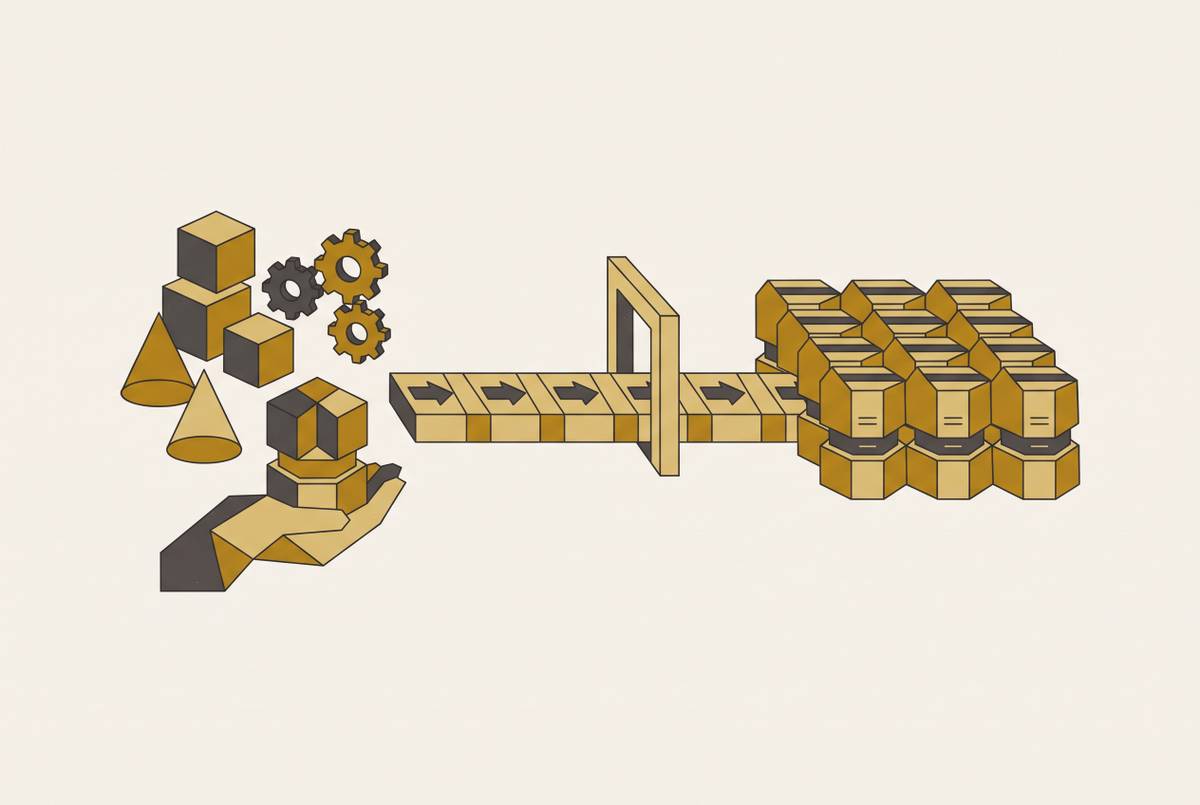
A mechanical bill of materials rarely comes from one process. A single assembly might need CNC milling, sheet metal, a casting, a custom spring, a gasket, a bent tube, and a wire EDM cut, each demanding different machines, different tooling, and a different kind of operator skill. That mix is why the usual advice to cut your vendor list doesn't map cleanly onto hardware sourcing, and why engineers need a framework built for mechanical parts specifically, not borrowed from software or indirect spend. This piece lays out that framework: what consolidation buys, where it stops paying, and what separates a real multi-process partner from one that just lists more capabilities on its website.
Why multi-process mechanical BOMs resist generic consolidation advice
A BOM looks tidy on a spreadsheet. One row for the housing, one for the bracket, one for the spring, one for the gasket. Then the sourcing starts, and that tidy spreadsheet turns into five separate vendor relationships, five separate lead-time clocks running on their own schedules, and five separate quality checks, all of which have to land before a single assembly can ship.
Most consolidation advice was built for a different kind of spend. It grew out of indirect categories like software, telecom, and cloud services, where one vendor's output looks and performs about the same as another's, and the main variable is price. Reduce the supplier count there, and the gains are close to automatic: fewer invoices, more leverage, less admin. A mechanical BOM doesn't work that way. A spring isn't interchangeable with a gasket, and a sheet metal shop running a stamping press cannot also run a casting line or a wire EDM setup with the same skill. The capital equipment is different, the tooling philosophy is different, and the people running it have spent years learning one discipline, not five.
This article is built around how to get the real, measurable gains of consolidation without pretending that mechanical processes are as interchangeable as a cloud subscription. The rest of the piece works through where consolidation earns its keep, where it runs into the physical limits of specialty manufacturing, and what to actually look for in a partner who claims to cover the whole BOM.
What consolidation buys, and where it stops paying
Consolidation earns its reputation honestly when the work is standardized. Fewer purchase orders, simpler invoicing, tighter visibility into spend, and real pricing leverage are not marketing claims. They are a predictable result of putting more volume behind fewer vendors.
Administrative load drops first and drops the most. Every supplier added to a program comes with its own contract, its own point of contact, its own set of emails and change orders to track. Cutting that list down frees procurement teams to spend less time on paperwork and more time on work that actually changes outcomes. That alone is worth something on a busy hardware program, where engineering and sourcing often run through the same overstretched team.
Concentrated spend also buys negotiating room. A supplier handling a meaningful share of a program's volume has a reason to agree to things a smaller account never gets: pricing tiers, performance targets written into the contract, scaling terms that flex as the program grows. That turns a transactional vendor into something closer to a partner with a stake in the outcome.
The ceiling appears once the work demands depth a generalist doesn't have. Pushing too much critical, specialized work onto one vendor makes the program depend on that single point for everything. A bottleneck in one process can stall the whole build. The costs of over-consolidation surface late, in a slow response when a material changes, an escalation the vendor can't actually resolve, or an engineering team building workarounds because the vendor won't flex on a bespoke spec. None of that is visible on the first purchase order. It becomes visible months later, usually during a schedule crunch.
Specialty processes and their resistance to consolidation by a generalist
A generalist vendor scales by standardizing. Standard tolerances, standard materials, standard processes repeated at volume, because that repetition is what makes the business efficient. That same efficiency is what makes a generalist slow and shallow the moment a part falls outside the standard menu.
Custom springs make the case directly. Most spring applications don't fit a stock part. Spring shape, wire material, surface treatment: all of it has to be worked out for the specific load, deflection, and environment the spring will actually see, and that design work is the core of what a spring specialist offers, not a side service bolted onto it. A generalist treating spring design as an afterthought is skipping the part of the job that actually matters.
Gaskets carry a comparable burden, just in a different direction: quality documentation. A serious gasket supplier runs ISO 9001 certified processes with documented inspection, calibrated measurement, full lot traceability, and, for regulated work, clean-room manufacturing to ISO 7 or Class 10,000 standards, amounting to a complete quality system built around one process. A shop juggling five processes at once is unlikely to run that same rigor on all five simultaneously, simply because the systems, the training, and the audit discipline for each one are not interchangeable.
Tube bending runs into a different kind of wall: physics. Repeatable bends need dedicated tooling and controlled equipment, or the tube thins out, wrinkles, flattens, kinks, or cracks. Parts with more than one bend need precise rotation and orientation data between bends, because a small rotational error anywhere in the sequence can mean the finished tube simply doesn't fit into the assembly it was built for. None of that is a matter of operator effort. It's the process. A shop that handles tube bending as a secondary capability fails here, and the failure surfaces quietly, weeks later, as a fit problem on the assembly line.
Each of these processes carries its own body of specialized knowledge, built up over years, specific to the materials and failure modes involved. Covering a process on paper is not the same as understanding it deeply enough to catch problems before they become scrapped parts.
Coordination overhead and schedule risk across a fragmented vendor list
Even when every specialist on a vendor list is individually excellent, the act of running five of them toward one assembly creates its own risk, separate from the quality of any single vendor's work. The real cost of a fragmented supply chain is not found in any one part but in the coordination between parts: the scheduling, the handoffs, and the quality checks that have to line up across vendors who may never talk to each other directly.
Material choice alone can throw a schedule off. Titanium takes substantially longer to machine than aluminum, and aerospace-grade materials often carry procurement lead times measured in weeks, not days. One vendor in the chain might know that cold. The others, waiting on that part to finish before they can start their own step, might have no idea their own schedule is riding on a material lead time nobody told them about.
Prototyping is where this risk peaks. Skipping a qualification lot to save time causes a launch date to slip later for reasons no one predicted. Engineering change orders pile up and collide with drawings that were supposed to be frozen weeks earlier. A costed BOM, built on an assumption of normal lead times, blows past budget once expediting fees get added in. Swapping a supplier late in the process starts a re-qualification cycle from scratch. Each of these failure points is survivable on its own. Stacked across five vendors on one assembly, they compound.
Expediting carries its own repeating cost. Every time one vendor in the chain falls behind, the fix is usually to pay a premium to speed something else up, and that premium recurs every time the schedule slips again, not just once. More vendors also means more places for errors and inconsistencies to enter a build, and fewer direct lines of communication to catch them fast. A short vendor list means a problem gets traced and fixed quickly. A long one means the opposite: more people to loop in, more handoffs to retrace, and more time lost figuring out which link in the chain actually broke.
None of this argues that specialists do bad work. It argues that the interface between specialists, the handoff points where one vendor's output becomes another vendor's input, is where hardware programs actually lose time.
DFM feedback as a measure of a consolidation partner's actual depth
The clearest test of whether a vendor's multi-process coverage is real or just a long list of services on a website is the quality of the design-for-manufacturability feedback it gives back. A vendor returning a thin, generic review is a vendor reselling capacity in a process it doesn't actually understand.
Done right, DFM means weighing design intent against manufacturing constraints while the part is still being designed, not after it's already been cut. Applied early, that catches features that are hard to produce consistently and aligns tolerances with what the chosen process can actually hold. Skipping that step lands the costs squarely on the hardware team: wasted time, a compromised design, and in the worst cases a part that has to be redesigned from the ground up after tooling or material has already been committed.
A vendor covering CNC, sheet metal, springs, and gaskets under one roof needs a separate, detailed DFM rule set for each, because the constraints that govern a spring have nothing to do with the constraints that govern a machined housing. A review process that treats them as interchangeable is worse than skipping review altogether, since it gives the engineering team false confidence in a check that never actually happened.
The quote process itself reveals this fast. A platform with genuine depth across processes returns feedback specific to each line item in a mixed-process BOM: a call-out on the spring's wire diameter, a separate note on the housing's wall thickness, each one specific to the process it addresses. A vendor's DFM system is a window into whether it actually understands each process or merely lists them. Instant quoting paired with real-time manufacturability feedback across several processes at once, rather than a single-method DFM check bolted onto a wider catalog, is the signal that a partner reasons across manufacturing methods simultaneously and can catch the mismatches a generalist misses. OneWeekParts is built around this exact workflow, returning DFM feedback tied to each process in a quote rather than a single acknowledgment that a file was uploaded.
The quality assurance gap that opens when assembly inspection is split across vendors
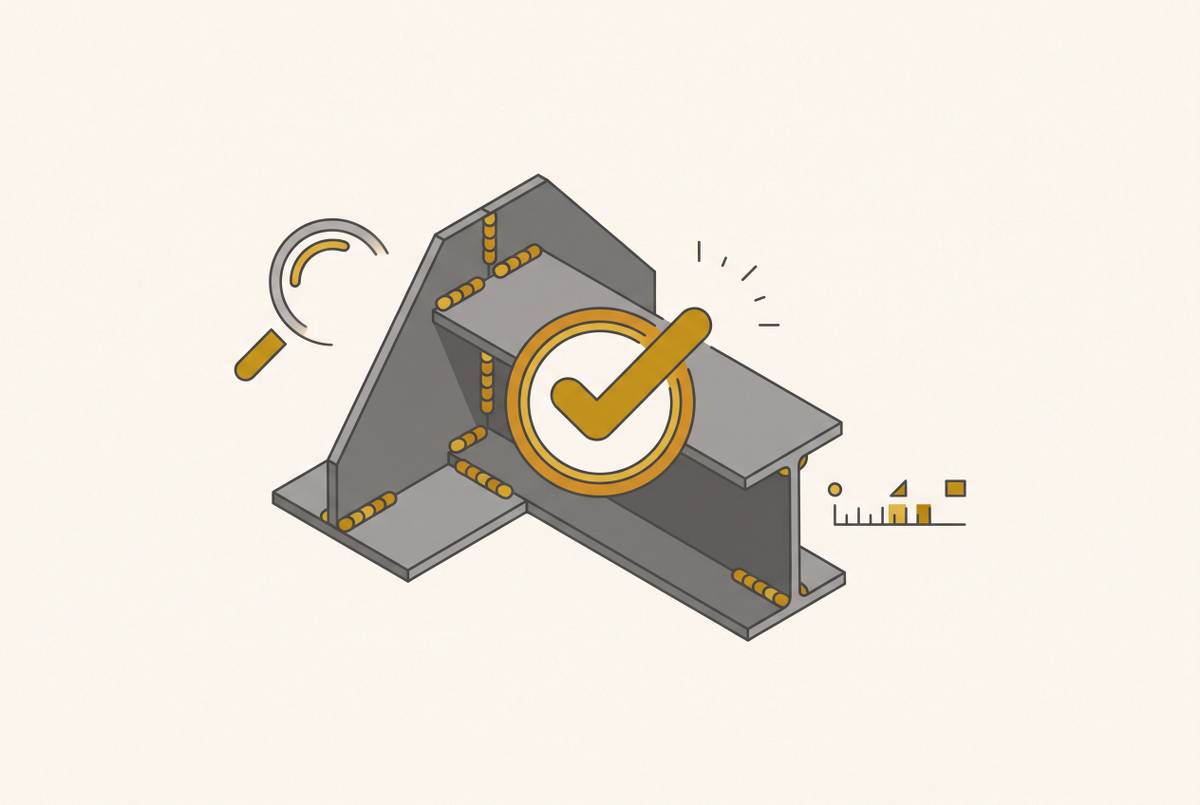
Five vendors each inspecting their own parts does not add up to one inspected assembly. Fit, stack-up tolerance, and interface compatibility are properties of how parts come together, not properties any single part can carry on its own. A bracket can pass every dimensional check in isolation and still fail the moment it meets the housing it's supposed to bolt onto.
Vertical integration solves part of this within a single process family. A supplier that both forges and machines a component, running CMM inspection, calibrated measurement, full material traceability, and a certified quality management system throughout, controls the entire quality chain for that one part. That's a real and valuable thing. It just doesn't extend past the boundary of that one process. The forge-and-machine shop still has no visibility into whether its part fits the gasket coming from a separate supplier three states away.
That's the gap that closes only one way: a single partner who inspects every part before it ships and sends out one completed assembly instead of five separate boxes from five separate loading docks. No amount of per-vendor certification, however rigorous, substitutes for someone checking that the parts actually fit together before the program finds out the hard way, on the assembly line, with a launch date already set.
Deciding what to consolidate, what to keep specialized, and what to look for in a consolidation partner
The right question for a hardware team is which parts of the BOM actually reward consolidation, and what a partner needs to bring to the table before that consolidation is safe to lean on.
Mixed-process assemblies tend to reward consolidation most, because the value there comes less from any single vendor's unit price and more from synchronized schedules, coordinated handoffs, and one party checking the assembly as a whole rather than five parties each checking their own slice of it. Some parts of a BOM still call for a dedicated specialist regardless of how good a consolidation partner is: anything that requires a regulatory documentation regime like AS9100 or ISO 13485, which a consolidation partner either needs to hold directly or coordinate explicitly, and anything with process requirements so unusual that no multi-process shop has built genuine depth in it yet.
Evaluating a prospective consolidation partner comes down to a short set of concrete checks. Process coverage should extend past the easy categories of CNC and sheet metal into the processes that are genuinely hard to source, including custom springs, gaskets, tube bending, carbon fiber, and wire EDM. DFM feedback should arrive instantly and specific to each process inside the quoting workflow itself, not as a separate consulting call scheduled days later. A mixed-process BOM should come back as one quote, one purchase order, and one shipment, which is the clearest operational tell that a vendor is actually consolidated rather than a broker stitching together quotes from separate shops behind the scenes. Every part should be inspected before it ships, under a quality guarantee that covers how the assembly performs as a whole, not just whether each individual part meets its own print. Turnaround should be measured in days rather than weeks, backed by engineering support available the same day a question comes up, so the partner absorbs schedule pressure itself.
The real test of a consolidation partner is whether it delivers the administrative and schedule gains of single-sourcing without reintroducing the hidden costs of over-consolidation: a vendor that keeps genuine DFM depth across every process it offers, turns complex assemblies in days instead of weeks, and backs difficult jobs with a real quality guarantee is one that actually solves the coordination problem rather than just centralizing it under one name. The challenge a mechanical BOM poses is depth across every process it touches, not just breadth across a service menu, and a platform built for that constraint, like OneWeekParts, combines CNC milling, sheet metal, casting, springs, gaskets, tube bending, and wire EDM into a single quote and a single delivery window, rather than quoting the easy line items and leaving the hard ones for someone else to source. That is the partner the framework above is describing, and the criteria are how to recognize one when it's time to choose.