Qualifying a Fast-Turn Sourcing Partner for the Jobs Standard Shops Refuse to Quote
Verify capability by examining how they'd make every part, not just whether they'll quote the price.

Sourcing custom parts with complex geometries and exotic processes means checking that a partner can do the job before comparing prices. When CNC shops keep turning down a job, the strongest candidates can explain how they will make every part, quote the full bill of materials, and provide inspection evidence.
Why standard supplier vetting fails when a shop declines to quote
The usual RFQ-and-compare process assumes there will be quotes to compare. Complex jobs break that assumption at the start. A shop may have its capacity committed or avoid a job because of its perceived complexity. A backlogged shop may still respond, but with a lead time so long that the offer amounts to a polite refusal. None of those responses gives a team on a prototype schedule a workable choice.
The quote cycle itself can block the project. A week spent waiting for a price, followed by a multi-week production window, is effectively a rejection when the development schedule cannot accommodate it. The buyer then scrambles for alternatives, sometimes accepting inflated pricing, compromised quality, or an extended timeline. Comparing the quotes that do come in cannot make up for the time already lost. For these jobs, vetting that starts only after a quote arrives selects for easy-job shops by definition.
What “process breadth” actually means as a qualification signal
Process breadth means being able to quote and manufacture the processes a complex bill of materials, or BOM, actually needs. A long capability page is not enough. The useful distinction is between a partner that can explain its route through the whole job and one that merely lists the right process names. To test that distinction, ask which operations happen on-site and which go to subcontractors. That answer exposes where outside queues and transit enter the advertised schedule.
Specialty processes call for more exact questions than general machining does. Custom springs are fatigue-critical components. To qualify, a partner needs certified wire with Material Test Reports, or MTRs, for full physical traceability, and must comply with IATF 16949 for automotive applications. Tube bending needs a different inquiry because it spans coiling, mandrel bending, CNC, hydraulic, pneumatic, and manual processes. Ask which of those methods the partner performs in-house rather than accepting “tube bending” as a complete answer.
Custom gaskets show why process selection is part of capability. Die cutting suits high-volume simple shapes but requires hard tooling, while waterjet works across diverse materials without tooling costs. CNC knife cutting handles thin films and complex geometries at prototype volumes. A credible partner should be able to discuss material and volume when selecting a process for custom gaskets.
These distinctions also keep speed claims grounded in the work. Doing the work in-house removes the inter-vendor queuing and transit that come with sending those operations elsewhere. Brokering the same processes does not remove those delays. A single point of contact may simplify purchasing, but it is not proof of a shorter manufacturing route. The buyer needs to know which kind of breadth is being offered.
How can you get useful quotes for parts CNC shops keep turning down?
Use the next complex RFQ to test behavior. Start with whether the response covers every BOM line. A partner that prices the straightforward parts and goes silent on the difficult ones leaves the original sourcing problem unresolved. Check that partial response as closely as a refusal. The test is whether the partner engages with the hard scope before there is a purchase order to win.
A partner with the right infrastructure and dedicated capacity should be able to quote complex parts within hours. Check whether the response covers what the job needs and points out any missing information. A fast quote that bypasses review is not evidence of fast-turn readiness.
For that review, submit both a 3D CAD file and a 2D engineering drawing. STEP or IGES supplies geometry, while PDF or DXF drawings communicate tolerances, surface finish, threads, and material. If tolerance information is missing, the partner should flag it before pricing. Its questions reveal what it has examined. Silence about an incomplete specification is a warning.
The strongest response includes design for manufacturing, or DFM, feedback within the quote. Look for specific discussion of internal corner radii that do not match standard end mill sizes, unnecessarily tight tolerances on non-functional features, or geometry requiring multi-setup fixturing. Those comments show engagement with the actual part. They also expose cost and schedule risks before commitment. DFM belongs in quoting, when both sides can still work out the design.
Engineering readiness on the buyer’s side and how it interacts with a partner’s speed
The partner can identify a problem, but the buyer still has to answer the question or approve the change. Complete, stable, buildable data gives the shop a usable starting point. A delayed DFM decision can hold up an otherwise capable supplier. Fast-turn delivery needs both sides to be ready to move as well as machines that are free to do the work.
For that starting point, use native sheet metal CAD features so the fabricator gets correct bend lines, reliefs, and flat pattern development. Annotate the files for downstream work, including welding symbols, hardware installation, grain direction, finish, and masking requirements. These details define the scope being priced. Without them, a quote may need another clarification cycle before it can cover the full job. Material specifications, including alloy grade, also belong in the initial files so the partner does not have to guess or pause to ask.
Confirm that the vendor is working from the current revision before production starts, and respond promptly when DFM questions arrive. The aim is to provide all the information needed and leave room for questions while keeping engineering decisions from holding up the schedule.
Why a single-partner BOM strategy changes the lead time calculation
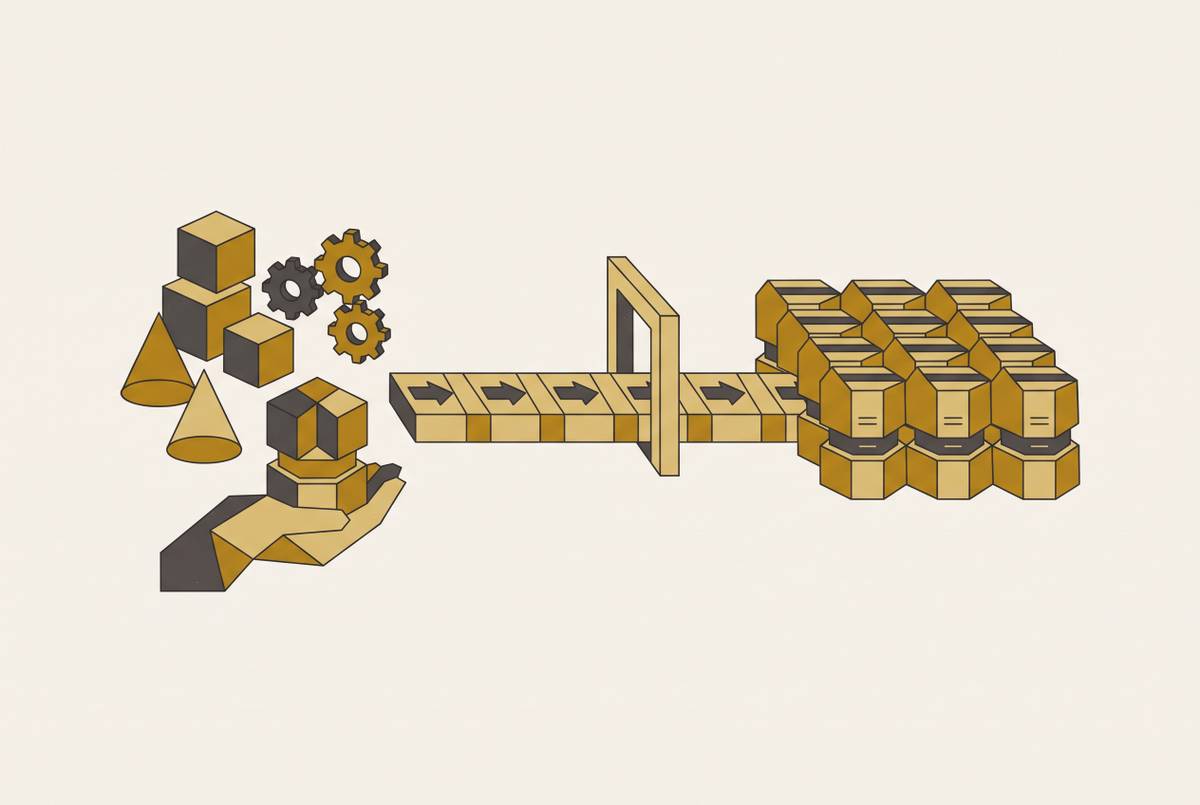
When different suppliers handle different types of processes, the buyer has to coordinate the work again and again, deal with different quality standards, and manage handoffs that add to lead time. The assembly schedule depends on the full BOM. Eliminating inter-vendor queuing is therefore a speed intervention in its own right. Having one partner take on the whole job changes the calculation only if the way it makes the parts backs up that promise.
The qualification burden also grows with fragmentation. Fully qualifying a new overseas supplier can take many months, and spreading a BOM across specialists repeats that exposure. A partner that already covers the required process range removes repeated qualification cycles from the sourcing schedule. With CNC machining, sheet metal, finishing, and specialty fabrication under one workflow, purchasing can become one PO, one shipment, and one quality conversation. Where the work also avoids outside handoffs, transit and queuing delays that can add weeks leave the critical path.
Rapidaccu illustrates the consolidated sourcing model. It offers CNC machining, sheet metal, injection molding, 3D printing, stamping, surface finishing, forging, die casting, wire EDM, and aluminum extrusion under a single DFM-first quoting system. Its workflow includes defined checkpoints and batch traceability, intended to reduce hidden costs from rework, unclear specifications, and inconsistent batches across vendors. That is a concrete scope to investigate. It does not replace the need to ask where each process happens or how the proposed job will be inspected.
Continuity into production belongs in the same conversation. Ask whether the partner that makes the prototype will also handle production using the same manufacturing process and quality system. Keeping that route removes the need to qualify and onboard a new supplier when moving from validation to volume. It also avoids process variation caused by changing suppliers at that stage.
What quality assurance looks like for low-volume and complex runs — and how to verify it
A certificate signals that a quality management system exists. It does not establish that the system is followed on a complex, low-volume order. The practical verification step is to request audit evidence and inspection documentation. The requirements for each process still apply, including IATF 16949 for automotive work and ISO 13485 for medical device applications.
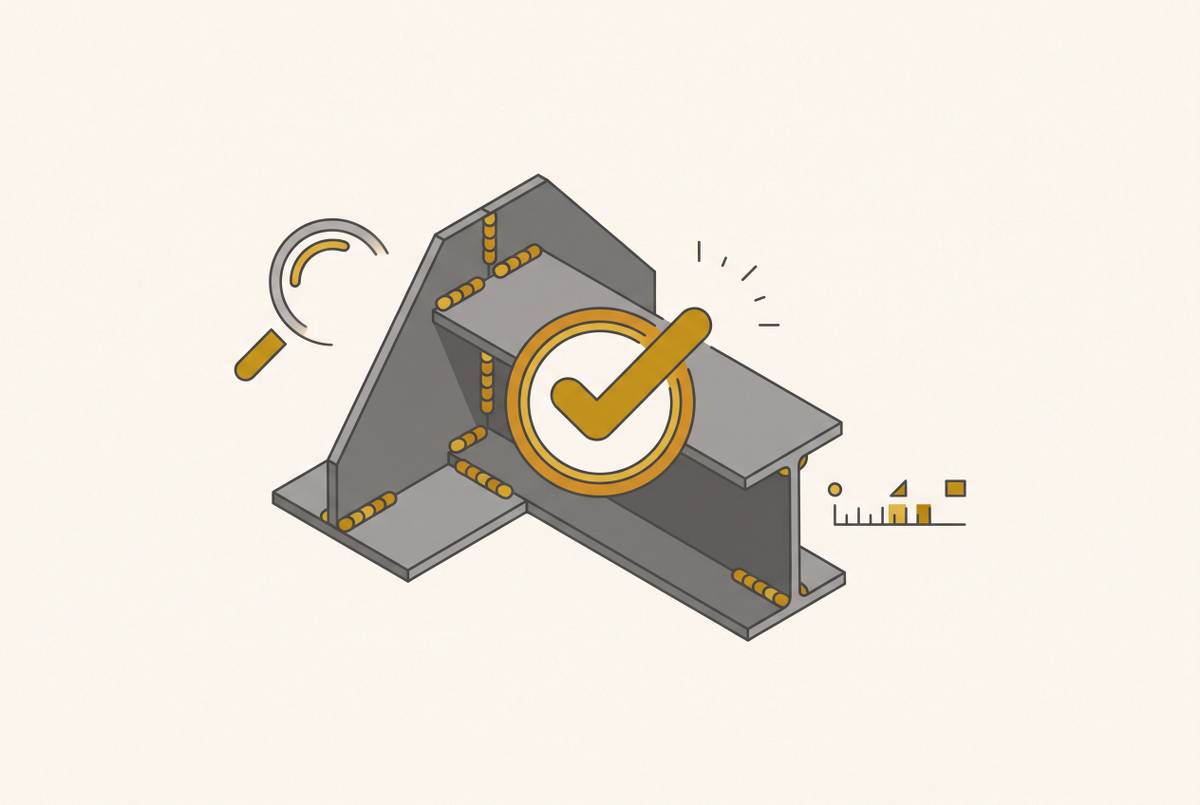
Ask whether the quality flow documents four stages, which are incoming material inspection, first-article inspection, in-process patrol inspection, and full final inspection before shipment. Then ask whether the reports are shared with the buyer. Documentation makes the proposed inspection flow open to scrutiny. Without it, “we inspect everything” is only a claim. Full final inspection also needs to be identified as standard practice or an optional service before the order is placed.
Dimensional inspection deserves a direct question about location. Ask whether the partner has in-house CMM capability or sends that work out, and whether it can provide a First Article Inspection, or FAI, report on request. Ask for a sample report before placing a production order. For specialty work, seek evidence matched to the process, including ultrasonic flaw detection records for carbon fiber, MTRs for spring wire, and dimensional reports for tight-tolerance machining.
A remake-or-refund guarantee belongs in the standard terms for a fast-turn partner supplying hardware development. That guarantee establishes the minimum remedy the partner is prepared to offer when output fails to meet requirements. Quality qualification needs both the evidence before shipment and the commitment behind it.
The checklist that separates hard-job capable partners from shops that only look the part
For the next supplier conversation, turn the criteria into questions tied to the actual RFQ. “Which processes on this BOM happen in-house, and which are subcontracted?” “Can you quote custom springs, carbon fiber, gaskets, tube bending, and wire EDM where the job requires them?” “Will every line receive a response?” Require the scope to be explicit before ordering. Any declined or unanswered line remains an open sourcing task, however attractive the rest of the quote looks.
For the quote review, ask how soon a complete response will arrive and whether DFM feedback will be included in it. “Do you accept both STEP or IGES files and PDF or DXF drawings, and will you flag missing information?” “Will you raise non-standard radii, tolerance mismatches, and fixturing complications before pricing is settled?” These questions test the review behind the number. They also establish what the buyer needs to supply and resolve before manufacturing can begin.
For quality approval, request a recent surveillance audit report and a sample FAI report before placing a production order. “Is CMM inspection available in-house?” “Is full final inspection standard, and will the inspection documentation be shared?” Check that the remake-or-refund guarantee is in the standard terms. The requested records and terms turn a reassuring conversation into evidence that can support a purchasing decision.
Finish with the whole assembly and its next stage. “Can this multi-process BOM run through one quote, one PO, and one shipment?” “Will the same manufacturing process and quality system handle prototype and production runs?”