The Pre-Launch Parts Checklist That Compresses a Two-Week Machining Cycle Into Four Days
A pre-release checklist for design, files, materials and finishing.
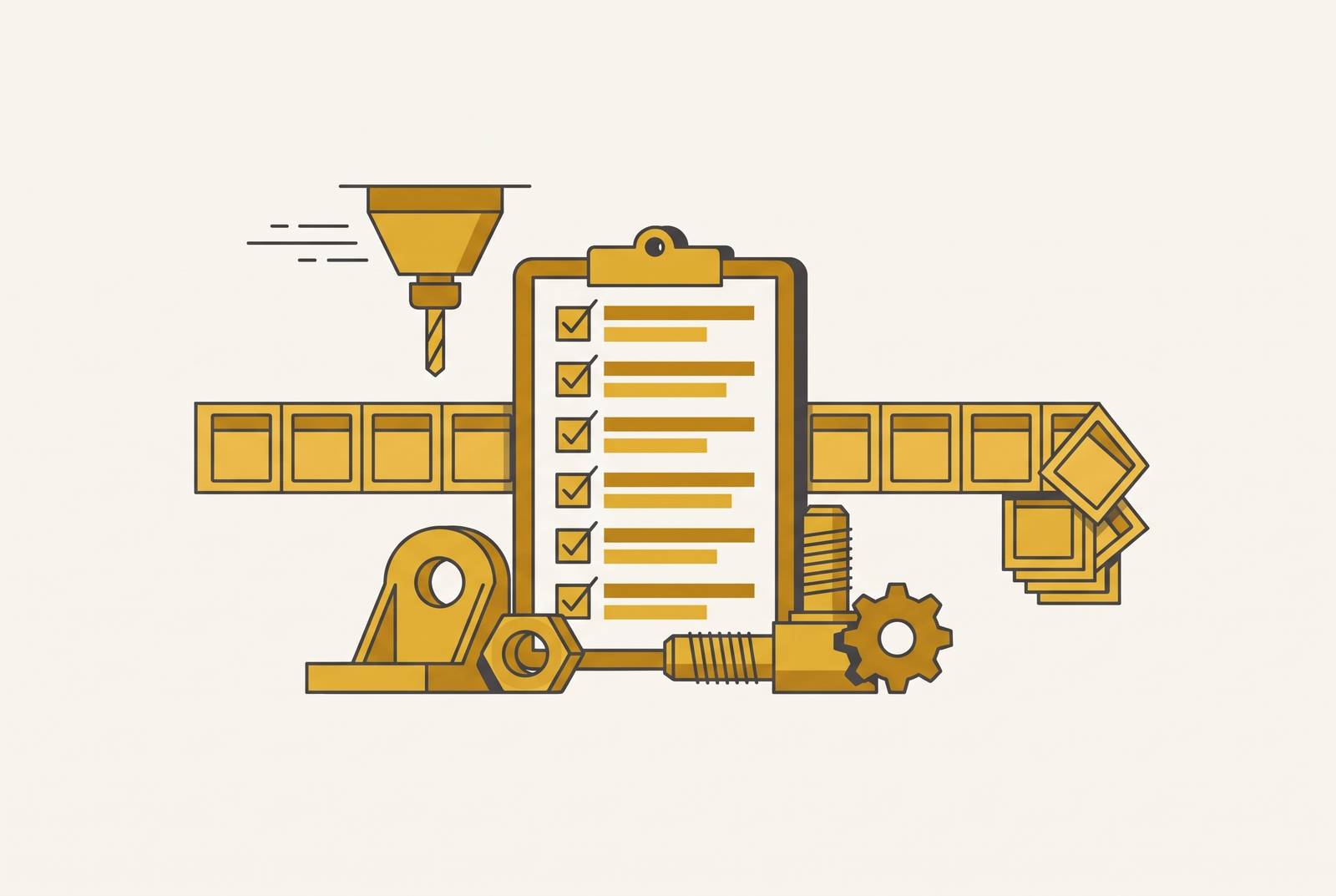
Fast-turn custom parts for hardware startups need complete releases as well as fast machines. The pre-launch parts checklist targets the recoverable delay that can turn a two-week machining cycle into a four-day job, covering design decisions, files, materials, finishing, and supplier handoffs. Four days is a delivery time that depends on the job. It is a schedule made possible when those avoidable waits are removed before cutting begins.
Why the two-week machining cycle is a coordination problem, not a machining problem
Engineers often blame slow turnaround on shop backlog or machine capacity. That misses much of the recoverable delay. A part can wait for a tolerance decision, a corrected file, or available stock without spending any time on a machine. Those waits accumulate independently of how fast the spindle moves.
Modus Advanced's DFM guide describes how one unnecessary tight tolerance or complex feature can ripple through programming, tooling, and inspection. Programming can take days longer, specialized tooling may need to be sourced, and inspection becomes more involved. The delay begins with the release. The practical response is to make the job more complete before submission.
What the checklist is actually compressing: the five stages where time disappears
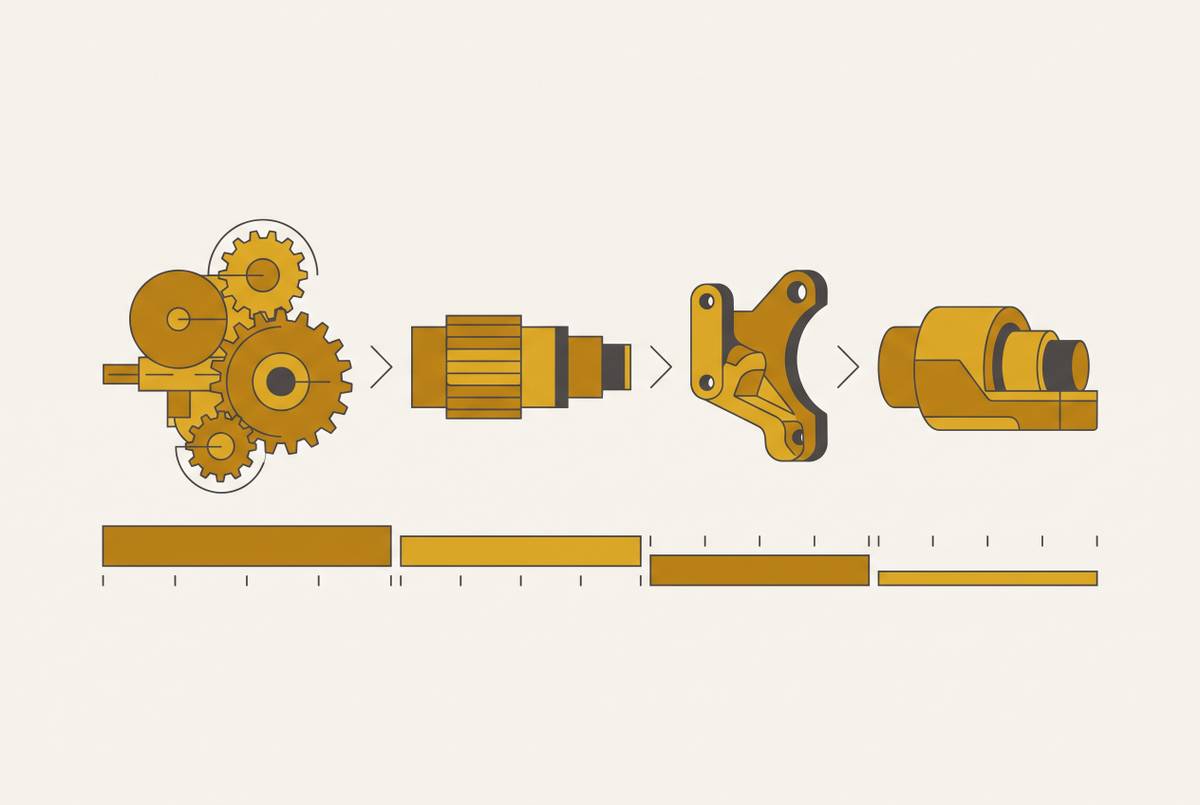
Stage 1 is the DFM revision loop. The shop flags geometry, tolerances, or features after submission, and the correction restarts the quoting clock. Material sourcing, finishing, and these revision loops account for roughly 58% of recoverable lead time in hardware launches. DZMaking's DFM guide frames early review as removing avoidable costs.
Stage 2 is the defective file package. Missing tolerances, non-watertight STEP files, absent material callouts, and mismatched revisions force the CAM programmer to stop. The shop needs a usable model and an unambiguous drawing.
Stage 3 is the material sourcing gap. An exotic or low-stock alloy needs a procurement cycle before cutting can begin. That wait sits ahead of the machining work. It belongs in the schedule before the quote.
Stage 4 is finishing and coating sequencing. If surface finish is still undecided when machining ends, work to prepare for it starts later than it could have. The physical operations still have their order. The lost opportunity is to book and stage finishing while machining is underway.
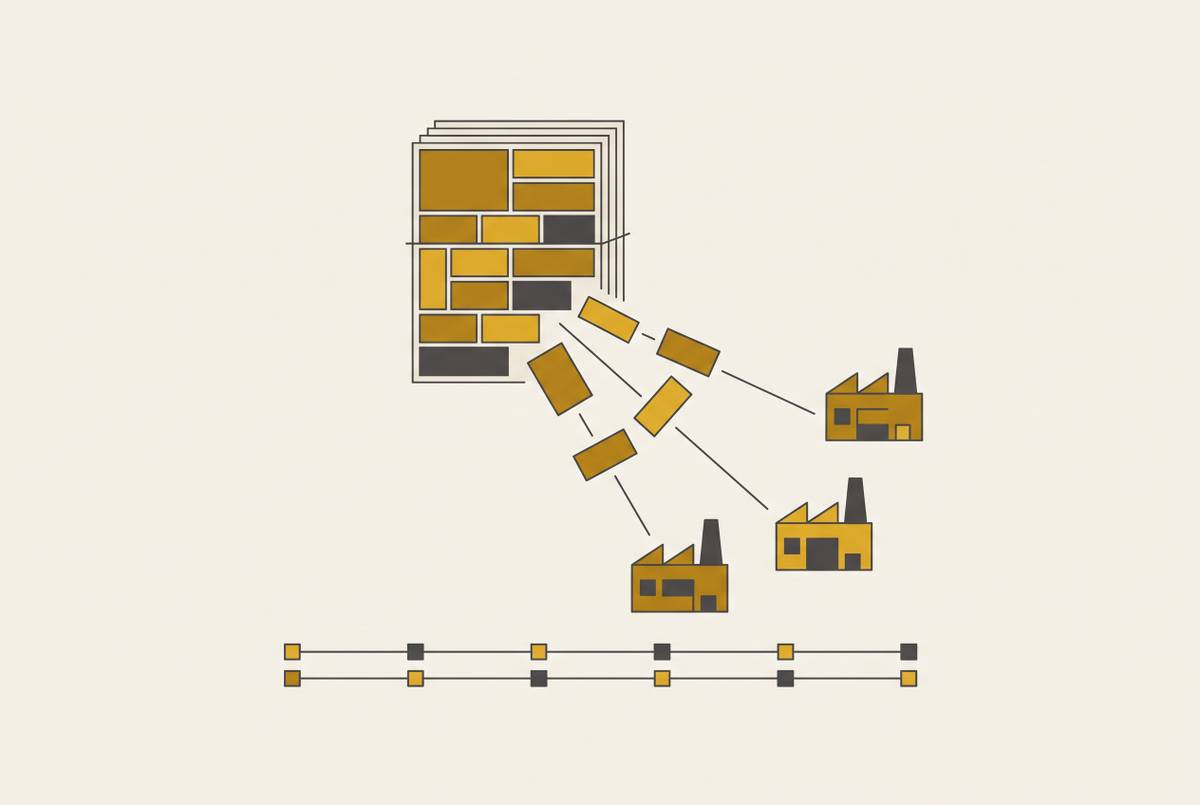
Stage 5 is vendor fragmentation across the bill of materials. Each supplier boundary adds purchasing, shipping, receiving, and quality checkpoints, even when every shop performs on time. Shared production floors keep those scheduling decisions internal. The checklist addresses all five stages in sequence, from a quotable design to a coordinated assembly.
DFM sign-off: the geometry and tolerance decisions that prevent revision loops
DFM sign-off has the highest leverage because it prevents both correction time and the penalty of re-entering a queue. Effective implementation can cut lead times by 25–60% compared with non-optimized designs. Before submission, document the geometry and tolerance choices that let the shop quote a frozen baseline.
For CNC parts, size internal corner radii to standard cutter diameters. This lets the programmer assign a tool without custom grinding or slowing the path to reach a small radius. Standardize hole diameters across the part to reduce tool changes. The DZMaking guide connects simpler geometry with better tool access and more stable cutting.
For sheet metal, match inside bend radii to one standard value where the design allows it. Each different radius needs its own punch-and-die set. A shared radius lets one tooling setup handle every bend. Choose standard hole diameters too, because nonstandard sizes require custom punches or laser-only processing.
Tolerances need a check of their own before release. Check each callout against how the assembly works, keeping tight tolerances where a critical or mating feature needs them. Do not tighten the rest by default. Over-specification forces slower cutting, in-process gauging, and sometimes a dedicated CMM slot. The goal is a stable process from the first unit, rather than a prototype that meets its specification only through manual adjustment.
File hygiene: the submission package that prevents the CAM programmer from stopping
A DFM-clean design can still arrive as an unusable job. Errors in the package stop programming, cost the job its place in the queue, and send it back for corrections. The submission check therefore begins with the exported STEP file. It must be a watertight, geometry-checked solid that matches the released revision.
Check the export for missing faces and import errors. The programmer loads the STEP file first, so a defect can stop work before any tool path exists. Suppress or remove cosmetic and reference geometry that adds noise to the review. Use meaningful feature names in the model tree to reduce the risk of unpredictable changes during a DFM revision.
Send a complete 2D PDF drawing with the model. Call out tolerances per ASME Y14.5, establish GD&T datums, and flag critical features. Include the material alloy, temper, and relevant specification for materials such as “aluminum” or “steel. State the quantity tiers and what inspection must cover upfront so the shop can proceed without another email asking for details.
The drawing also needs the surface finish requirements. A finish mentioned only after quoting cannot support early scheduling of anodize, plating, or powder coat. For development units, explicitly waiving cosmetic finish can recover multiple days. That waiver is a decision the shop can act on, unlike a blank callout that leaves the requirement unresolved.
Material confirmation: choosing stock over exotic before the quote is submitted
Material selection is also a lead-time decision. Common aluminum alloys, including 6061 and 7075, are typically stocked by distributors and shops, while specialty materials can require procurement before any cutting begins. Availability still needs an explicit check. Before submitting files, confirm that the specified alloy and temper are in stock or document the sourcing lead time in the schedule.
This is not an instruction to use cheaper material. If an exotic alloy is functionally required, its procurement belongs in the plan. For a prototype whose production material remains undecided, a machinable stand-in is a legitimate sequencing choice when the production material is documented separately. Where castings are involved, material confirmation also includes the process choice because dimensional tolerances affect downstream machining allowance and inspection time.
Finishing specs and sequencing: deciding before release what happens after machining
With anodize type, plating, powder coat, passivation, or heat treat defined before release, the shop can book the operation, kit materials, and stage the job while machining is queued.
Put color, applicable masking requirements, and certification needs on the drawing before submission. Mating surfaces and threaded features need clear masking instructions. State whether the finish is cosmetic-only or functional because that distinction affects inspection criteria. Special process certifications must also be specified early, as they change both scheduling and the documentation the shop must collect.
Late certification requests trigger a separate procurement and paperwork cycle. Choosing the finish late also adds work at the end of the schedule, and faster machining cannot make up that time. For prototypes, the deliberate alternative is an explicit “as-machined, no finish required” callout. An omission invites a question. A written waiver removes the finishing queue.
BOM consolidation: eliminating the handoff delays that compound across a multi-process assembly
A complete part release does not solve a fragmented assembly schedule. A typical BOM may send sheet metal to one shop, machined brackets to another, welding or assembly to a third, and finishing to a fourth. Every boundary creates another schedule event. The coater waits for the fabricator to ship, and assembly waits for coating to finish.
Those steps still depend on one another even when each supplier does what it promised on time. Separate facilities make scheduling decisions independently, with queues the engineer cannot see. When fabrication, finishing, and assembly share a production floor, sequencing stays inside one shop.
Design choices can make that consolidation more effective. Breaking an assembly into logical modules lets different components run through parallel production cells. Combining smaller parts into one machined component removes assembly steps and inventory touchpoints. For complex builds, part consolidation can achieve more than 50% lead time reduction compared with multi-machine workflows.
Specialty processes need the same care at release as machined parts. Tube bending quotes stall when bend specifications, materials, or run volumes are unclear, extending quoting from hours to days. Standardizing bend radii at 2–3× OD across designs reduces tooling variety and speeds setup. CNC-controlled tube laser cutting can also combine complex cutting with operations otherwise handled by sawing, drilling, and deburring.
The checklist calls for each BOM line to list every process it needs before release. Confirm that one partner can quote all of them. An orphaned line item can become the schedule-critical path even if every other part is ready. That makes demonstrated multi-process capability a more useful selection criterion than a fast quote on only the easiest components.
Consolidation does bring single-source dependence and less pricing leverage. A partner's capacity gap can hold up the whole BOM. The response is to select demonstrated capability and a quality guarantee that puts rework or replacement costs on the supplier. Fragmentation has its own compounding risks, including invisible handoff delays, missed revisions, and quality disputes between shops.
Bundling prototype and production releases: the scheduling move that recovers time on both runs
Releasing prototype and production orders together can recover time on both runs. Separate sequential jobs require the shop to program, fixture, and set up twice, while the production order enters the queue independently. A bundled release shares those fixed costs. A small batch of prototypes can therefore ship faster while production goes ahead without waiting for a separate ordering cycle.
A conditional purchase order preserves room to respond to prototype results. Production can be modified or cancelled. The design still needs enough stability to commit the production geometry, because changes after both orders enter work cost more than changes before submission.
Quality inspection as the gate that makes speed permanent rather than risky
A part that fails to fit on the assembly bench can erase the time saved before cutting. Inspection belongs before shipment. Its requirements should travel with the original submission package so the shop can plan the work.
Request a CMM report with actual measured values for critical features. Ask for a material mill cert that shows the alloy, heat number, and mechanical properties. Include special process certifications for heat treat, anodize, or plating where function requires them. These records make acceptance depend on the specified part.
Inspection access also belongs in DFM sign-off. The DZMaking guide identifies accessible inspection features as a design consideration because features beyond standard gauging need specialized equipment. That can introduce an inspection delay or a CMM queue slot.
A remake-or-refund quality guarantee is the minimum acceptable standard for the supplier relationship. It places the cost of a non-conforming part with the shop. A four-day shipment only protects a launch when the parts pass the gate.