Buffer Strategy for Hardware Schedules Under Regulatory Deadlines
Distribute buffers across procurement, fabrication, and regulatory nodes instead of padding the end.
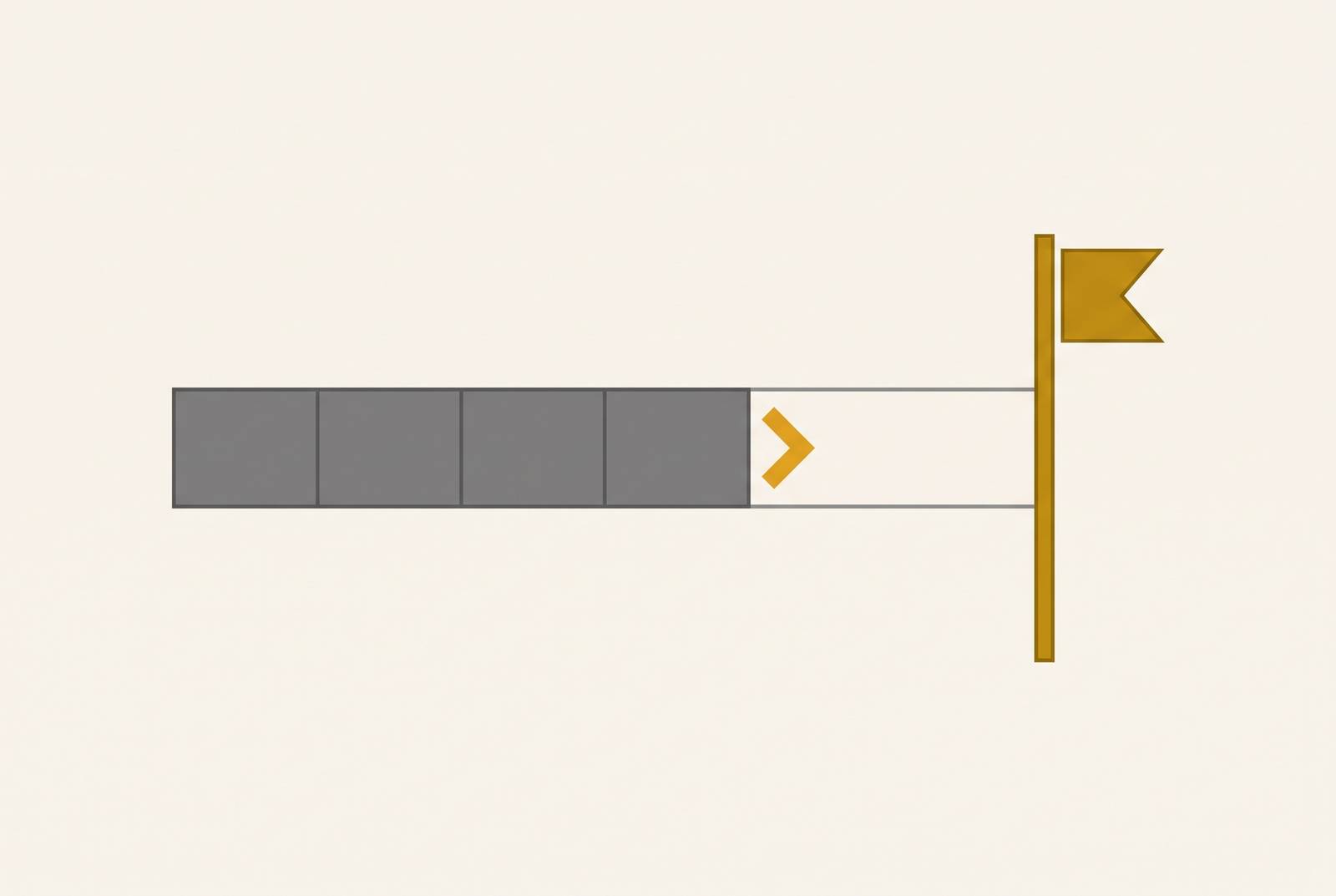
Padding the final milestone with a few extra weeks doesn't protect a hardware schedule from the risk that actually threatens it. Regulatory deadlines don't move, but the steps that lead up to them, fabrication, inspection sequencing, and approval queues, each carry their own uncertainty, and that uncertainty stacks rather than averaging out. A single cushion placed at the end assumes the schedule behaves like one chain with a single weak link, but a regulated hardware schedule behaves like several chains running at once.
Schedule buffers on a regulated hardware timeline should be distributed node by node, not pooled at the end. Each high-risk node, material procurement, custom fabrication, DFM-driven rework, and regulatory inspection sequencing, carries its own variance, and that variance stacks rather than averaging out, so a single cushion at the final milestone leaves every upstream node exposed. Procurement buffers should be sized as a meaningful multiplier above the quoted lead time, applied separately to each lead-time category rather than blended across the BOM, since an 8-week structural tubing order and a 52-week titanium aerospace fitting produce wildly different absolute buffers from the same percentage rule. DFM rework buffers belong before fabrication starts, not after, and regulatory buffers should be sized against the agency's actual published review cycle with room for a resubmission, while the overall schedule gets built backward from the longest-lead item so the critical path drives sequencing rather than the design freeze date.
Custom hardware development falls into what's known as engineer-to-order supply chains, and a paper published in Computers & Industrial Engineering found this category suffers most when buffers aren't configured node by node. A single buffer at the end leaves the upstream nodes, material sourcing, fabrication, DFM rework, inspection, exposed. Variance at any of them flows straight into the critical path with nothing to absorb it.
Boeing's production record between 2020 and 2024 shows what that looks like once it's running at scale. Regulatory approval delays combined with a restructured component supply chain to knock production and delivery out of sync, building up undelivered inventory that then squeezed the cash flow and capacity of suppliers further down the chain. No cushion tacked onto the back end of that schedule could have stopped the chain reaction once the upstream nodes had already slipped. That's the mechanism a flat end-buffer fails to account for: delay doesn't wait patiently at its origin. It travels.
Where does timeline risk concentrate in a regulated hardware schedule?
Risk in a regulated hardware schedule isn't spread evenly across every task. It concentrates at four points, and each one behaves differently enough that lumping them into a single risk category leads to bad buffer decisions. Those four are material procurement, custom fabrication, DFM-driven rework, and the sequencing of regulatory inspection and approval.
Material procurement has gotten less predictable, not more, over the past several years. Craftsmen Industries reports lead times for custom fabrication raw materials now run longer than pre-pandemic baselines, and the gap between material types has widened. CRD Manufacturing reports that structural tubing runs six to eight weeks, while specialty aerospace fittings machined from titanium and other exotic alloys can take 52 to 80 weeks. A team that applies the same assumption to both categories will get the exotic parts wrong nearly every time. Mixed mechanical and electronic assemblies carry a second layer of the same risk: Utmel's mid-2026 forecast puts advanced 32-bit MCUs and high-current power management ICs at 20 to 40-plus weeks, with some automotive and industrial families running as long as 52 weeks. And quoted lead times, whatever the part, describe a floor rather than a guarantee. Allocation status, how deep a supplier's queue actually runs, and tariff-driven substitutions on Chinese electronics all push real delivery past the number on the quote.
Fabrication carries its own hidden variance, mostly because the process routing isn't one continuous operation. Laser cutting, CNC punching, rotary draw bending, weld procedure qualification, and powder coating each sit in a separate queue and can't all run in parallel. Regulatory requirements make the sequence longer still: carbon fiber machining certified to ISO 9001:2015 calls for a documented quality system covering material traceability, in-process monitoring, and dimensional verification, and inspections for fiber breakout, delamination, or ultrasonic testing often get layered on as best practice even where the standard itself doesn't mandate them. Every one of those checks is a potential hold point.
DFM-driven rework is the node most teams underestimate, mainly because it hides behind a prototype that already works. Wevolver and OPD Design find that the distance between a functional prototype and a part that can actually be manufactured at scale is where roughly 70 to 80% of total manufacturing cost gets locked in, and a design change that's cheap before tooling gets drastically more expensive once tooling exists. Multi-vendor environments make this worse by delaying DFM feedback until the design is already fixed, so the rework risk lands in a window that's already tight against the fabrication start date.
The fourth node, regulatory inspection and approval sequencing, behaves less like a task and more like an external queue outside the team's control. CMiC's data on data center construction in 2026 shows the pattern in a different industry: permitting and utility approvals that aren't built into the core schedule from day one become the constraint that decides when the project actually finishes. Product regulatory submissions run on the same logic.
Sizing buffers at each high-risk node instead of a flat percentage
Each node needs a sizing method that matches how its risk actually behaves. Procurement calls for a percentage rule applied above the quote. Fabrication calls for fixed allowances tied to specific processes. Regulatory review calls for modeling based on how the external queue actually moves, not on how fast the internal team wants to go.
Start with procurement. Current practitioner guidance treats the quoted lead time as a floor, not a forecast: on parts under formal allocation, add a meaningful buffer beyond what the supplier quotes, so a 16-week quote should show up in the schedule as considerably more than 16 weeks. Craftsmen Industries makes the same point about raw materials specifically, calling a buffer beyond the quoted delivery window one of the most effective ways to protect a fabrication schedule. That multiplier needs to track the actual lead time category rather than some blended average across the BOM. An 8-week structural tubing order and a 52-week titanium aerospace fitting might use the same percentage rule, but the absolute buffer each produces is wildly different, and both numbers need to show up explicitly in the schedule rather than getting averaged away. For parts sitting under extended allocation, Utmel's mid-2026 guidance recommends pushing the forecasting horizon out to three to nine months and lining up spot-market inventory through vetted independent distributors before a franchised channel stalls out.
Fabrication buffers work differently, because much of the delay there comes from fixed-duration steps that don't compress no matter how much schedule pressure gets applied. Weld procedure qualifications, hold points, and third-party inspections each need their own explicit time allocation, separate from the fabrication cycle time itself. Inside Metal Fab's supplier selection guide shows process routing also changes the math: a part that travels through laser cutting, forming, welding, and powder coating at separate vendors sits in queue between each handoff, while a vertically integrated supplier running all of those steps under one roof and one quality system can cut total lead time by 20 to 40%. That difference changes how much external buffer the schedule actually needs. Cutting weeks out of the fabrication cycle before the buffer conversation even starts is its own form of schedule protection.
DFM rework buffers need to sit before fabrication starts, not after. A rework allowance parked at the end of the schedule can't do anything for a hold point that shows up during first-article inspection. Size that buffer against design maturity and how novel the process is: a well-worn part running through a familiar process needs a small allowance, while a first-run carbon fiber geometry or a part moving from prototype to production tooling for the first time needs a much bigger one. AI-assisted DFM tools that flag manufacturability problems during the design phase itself, rather than in a separate review stage downstream, a trend Autodesk's current DFM guide points to, shrink the time this buffer needs, though they don't eliminate it for genuinely novel geometries.
Regulatory buffers should get sized against the actual published cycle times of the agency or notified body doing the review, not against what the engineering team would prefer to happen. Plan to the queue, not to hope. Build in room for a resubmission too: unless a first-submission pass is a certainty, any buffer built around a single review cycle is already too thin. CMiC's look at 2026 data center construction shows what happens when permitting and utility approvals get folded into the core schedule as fixed anchors rather than trailing afterthoughts, and applying that same discipline to a regulatory product submission turns an external dependency into a scheduled milestone with a buffer attached to it.
Protecting the critical path when lead times and approval sequences are both outside your control
Sizing every buffer correctly still isn't enough on its own. The critical path itself needs restructuring: fewer external dependencies, shorter serial sequences, and high-variance work pulled as early into the schedule as it can go, back while there's still room to absorb a slip.
Procurement decisions belong at the front of the schedule. CMiC's data on 2026 data center builds shows the pattern directly: generators, switchgear, and transformers carry lead times of 12 to 18 months, so civil work and structural installation have to align to the equipment's manufacturing progress. Custom hardware programs face the same logic with long-lead castings, custom springs, or exotic tube fittings. CMiC's data shows that modularized data center projects that lock in procurement earlier cut total schedule time compared to conventional sequencing because the risk moves into design and procurement, where it's still manageable, instead of surfacing on the production floor where options have already narrowed. For mixed BOMs with both short-lead and long-lead parts, the critical path runs through the long-lead items, and the schedule needs to get built backward from those delivery dates rather than forward from the design freeze.
Collapsing serial vendor sequences pays off in a similar way. A BOM routed across five separate vendors doesn't just add up their individual lead times. Each handoff adds queue time, coordination overhead, and the risk of a tolerance mismatch between shops. The Fabcon and Inside Metal Fab sourcing guide shows that consolidating fabrication steps under one roof and one quality system cuts lead time by 20 to 40%. Altium's work with high-mix, low-volume production shows the procurement side of the same idea: shrinking a fragmented supplier base down to two distributors reduced shipping delays and simplified compliance paperwork. The gain isn't only speed either. Fewer vendors means less coordination overhead and DFM feedback that arrives earlier, which shrinks how much rework buffer the fabrication node needs in the first place.
None of this holds if the plan sits static after kickoff. The Computers & Industrial Engineering paper describes a cascading, risk-driven dynamic buffer management framework that improves on-time delivery by coordinating buffer resources across nodes through real-time monitoring. Static buffers sized at schedule kickoff erode without anyone noticing until a milestone slips. Assign an owner to each buffer node, set a trigger threshold (if raw material delivery slips past a set number of days, escalate and activate a backup supplier), and check buffer consumption at defined points in the schedule rather than only at milestone gates. CMiC's project controls model for construction links cost, schedule, fabrication, and site readiness together with real-time reporting, and programs that use it outperform ones that only check schedule health at formal milestones. Applied to hardware development, that means procurement, fabrication, and inspection status get reviewed together on a shared cadence, not separately inside their own functional silos.
Designing for agility trims how much buffer the whole structure needs. Multi-source PCB footprints and hardware abstraction layers let a component get swapped without a redesign. Utmel's mid-2026 guidance is blunt about the alternative: a late-stage MCU swap without those provisions triggers a new PCB layout, a full firmware rewrite, recertification, and months of lost production time; with them, the same swap is just a procurement substitution. The mechanical equivalent is designing to standard material grades and common tube sizes, and specifying ISO 2768-m general tolerances everywhere the function allows it, tightening only the features that actually need it. That cuts schedule exposure from both material substitution and inspection hold points. And extending the forecasting horizon well beyond just-in-time ordering, building distributor relationships before a shortage forces the issue, counts as baseline practice now, not some advanced defensive maneuver.
A layered buffer strategy for a multi-process mechanical BOM
The mixed BOM includes a sheet metal enclosure, a titanium fitting, a carbon fiber structural panel, and a PCB assembly built around a power management component under current allocation pressure. On this project, a single end-of-schedule buffer leaves the titanium fitting alone, at 52 to 80 weeks of lead time, able to eat the entire cushion before the sheet metal work even starts.
A layered strategy starts by building the schedule backward from the titanium fitting's delivery date, since the critical path runs through the longest lead item, not through the design freeze date. The PCB assembly gets its own buffer sized around key component lead times of 20 to 40-plus weeks, with multi-source footprints specified up front so a shortage on one part number forces a procurement substitution rather than a full board respin. The carbon fiber panel, being a first-run geometry, carries a DFM rework buffer placed before fabrication starts, sized larger than it would be for a familiar aluminum part, and it carries its own inspection allowance for the fiber breakout and delamination checks that tend to come with ISO 9001:2015 carbon fiber work. The sheet metal enclosure, if it's routed through a digital fabrication platform instead of a traditional job shop, might need only days of buffer rather than weeks, simply because the baseline cycle time is already short.
Consolidating vendors where the BOM allows it does double duty here. Routing the sheet metal, the carbon fiber panel, and the associated welding and finishing work through a single vertically integrated fabricator can cut lead time by 20 to 40% and gets DFM feedback into the process before tooling gets cut. That's less coordination to manage and fewer tolerance mismatches to catch at final assembly.
None of these buffers is static once the schedule is locked. The team assigns an owner to the titanium fitting's delivery date, sets a trigger for escalation if it slips against the quote, and reviews buffer consumption across procurement, fabrication, and inspection together on the same cadence rather than in separate functional silos, the way cross-node buffer coordination through real-time monitoring catches erosion that static buffers sized at schedule kick-off would otherwise let slip unnoticed until a milestone review. Executing this kind of layered plan for a mixed BOM, spanning sheet metal, exotic castings, composite panels, and electronics, is exactly the kind of work a full-BOM sourcing partner is built to coordinate: one point of accountability tracking every node's buffer instead of four vendors each managing their own piece in isolation.
Sources
- How Construction Firms Deliver Complex Data Centers in 2026
- MCU Power Management Availability Forecast 2026: Lead-Time Risks and Alternatives - Utmel
- Optimizing buffer management strategies for engineer-to-order project supply chains in uncertain environments - ScienceDirect
- Design for Manufacturing (DFM): The Complete Guide for Building Products That Actually Ship - Fusion Blog